
Problem overview
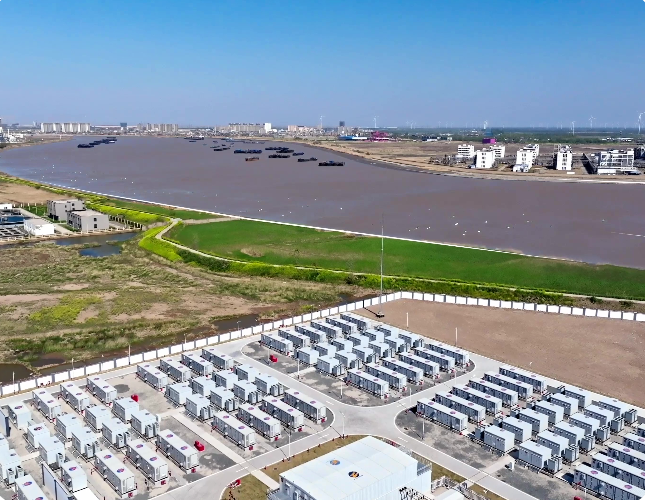
Commercial energy storage projects placed in deserts and other extreme climates face a single recurring challenge: ambient heat that shortens life and reduces reliability. Recent deployments of utility scale battery storage show real promise but also expose how temperature swings and sustained high heat accelerate capacity fade and increase maintenance costs. Hornsdale Power Reserve in South Australia, for instance, demonstrated both the value and the operational realities of large batteries under challenging local conditions — a useful anchor when weighing design choices. From a practical editorial perspective, the goal is simple: identify the thermal risks and recommend concrete fixes that owners, engineers and asset managers can apply now.
Why ambient thermal stress matters
Cells exposed to high ambient temperatures age faster because electrochemical reactions speed up; that reduces usable energy and raises the chance of thermal runaway in extreme cases. Thermal management system design directly affects cycle life, and the battery management system (BMS) must monitor trends in state of charge (SoC) and cell balancing to prevent hotspots. For commercial projects, even a small percentage loss in capacity translates to significant revenue impact over a 10- to 15-year contract.
Common failure modes to watch for
Typical issues in desert installations include: accelerated capacity fade during peak summer months; uneven cell temperatures causing imbalanced cycles; compressor or fan failures within active cooling units; and dust-driven clogging of vents that reduces cooling efficiency. Secondary effects show up as frequent forced derates or earlier-than-expected replacements of battery modules. These are concrete, measurable failure modes — not abstract risks.
Design and operational fixes that work
Start with enclosure and site-level choices before adding complexity. Passive options — reflective cladding, increased roof overhangs, and high-R insulation — reduce heat gain at low cost. Active thermal controls then keep cells within the optimal window: liquid cooling or directed-air cooling paired with a capable thermal management system (TMS) will limit temperature spread. On the software side, configure the BMS for narrower SoC operating bands during the hottest months and prioritize cell balancing cycles during cooler nights. Remote telemetry and analytics let operators schedule maintenance proactively — and avoid surprises. Don’t forget preventive work: filter changes and guard plates against sand ingress; these often get overlooked during commissioning. — A small maintenance habit saved a client weeks of downtime once.
Site and procurement checklist
When selecting or specifying systems, evaluate these items: rated cooling capacity with a 20–30% margin for extreme days; redundant fans or chillers to avoid single points of failure; proven BMS logic for thermal mitigation and SoC management; ease of filter access and dust-proofing details; and clear performance guarantees tied to operating temperature ranges. Also request field-proven telemetry that integrates with existing SCADA or asset-management software to track cell temperatures, SoC drift and alarm histories in real time.
Alternatives and trade-offs
Passive-only solutions cost less upfront and reduce operational complexity but deliver a lower safety margin on the hottest days. Full active cooling raises capital and O&M costs but keeps degradation predictable and often extends warranty compliance. Hybrid approaches — such as phase-change materials inside rack modules combined with moderate active cooling — balance capital and operational spend. For utility-scale deployments, comparing lifecycle cost per kWh of delivered energy under projected ambient profiles is the clearest way to choose. For reference, many modern utility scale battery energy storage systems use hybrid tactics to hit both cost and reliability targets.
Three golden rules for evaluation
1) Prioritise temperature-rated performance over lowest initial price: compare degradation curves at expected ambient extremes. 2) Require redundant thermal-critical components and simple maintainability — choose designs where filters and fans are serviceable without module removal. 3) Demand BMS/TMS integration with clear operational modes for heat events and contractual guarantees tied to delivered cycle life. These metrics let you compare vendors on apples-to-apples operational terms, not just spec sheets.
When the logic comes back to real value, reliable thermal performance is the difference between a project that meets its revenue model and one that becomes a liability — and that practical gap is where HiTHIUM provides measurable advantage: proven systems, integrated controls and site-tested service. — Practical, proven, necessary.