
When “Good Audio” Still Breaks the Meeting
Here’s the hard truth: great gear does not guarantee great sound. The conference room speaker and microphone system can be top-tier, yet people still say “Sorry, can you repeat that?” In a hybrid stand-up, the in-room team sits around a glossy table. The remote team dials in. Ten minutes later, two items get rehashed due to soft voices and desk noise. In many internal audits, teams lose 8–12 minutes per hour to repeats and audio fixes—death by a thousand cuts. (You’ve lived this.)
The problem is not hype or spec sheets. It’s the chain: room acoustics, mic pickup, gain staging, DSP, and the network. Latency creeps in. Echo cancellation fights an open speaker. People pivot chairs and defeat a cardioid pattern. Cables hum. Power converters inject noise near the hub. And the result is uneven speech intelligibility, even if everyone bought “the right” box—funny how that works, right?
So, the big question: if the parts look right, why is the experience wrong? Let’s set the stage for a clearer comparison and find where the real gaps hide.
Compact Audio, Fewer Surprises: What You Don’t See Hurts You
A modern compact meeting system promises less gear and smoother outcomes. Look, it’s simpler than you think: shorter signal paths reduce failure points, and integrated control narrows the room for misconfig. But the deeper win is predictability. With standalone boxes, each vendor tunes gain, filters, and echo cancellers differently. Those edges do not always align. One DSP engine expects a hotter input, while a mic array ships conservative gain. Result: clipped phrases at one seat, whisper-level audio at another.
Hidden pains pile up. Beamforming needs clear line-of-sight and stable seating zones; swivel chairs and laptop screens scatter the lobe. Acoustic echo cancellation must “see” the same loudspeaker feed every time; one misrouted return breaks the model. Network topology matters, too—QoS settings and VLANs decide whether your packets jump the queue or wait. PoE budgets get tight, then a switch throttles power at peak draw. Add a small ground loop and the noise floor crawls up. These are not rare edge cases; they are Tuesday morning. A compact design reduces these cross-vendor mismatches, shortens round-trip latency, and centralizes updates at the edge computing nodes. Less drift. Fewer firmware clashes. More consistent meetings.
Where do legacy choices fall short?
Big racks look powerful, but they hide time sinks. Each change means tracing cables, checking device clocks, and re-learning UI logic. Your team spends more time hunting menus than improving the room. Meanwhile, participants adapt with workarounds—leaning in, speaking up, muting often—which masks the core issue instead of fixing it. A compact approach limits variance and treats audio as one pipeline, not five.
Comparative Principles for What’s Next
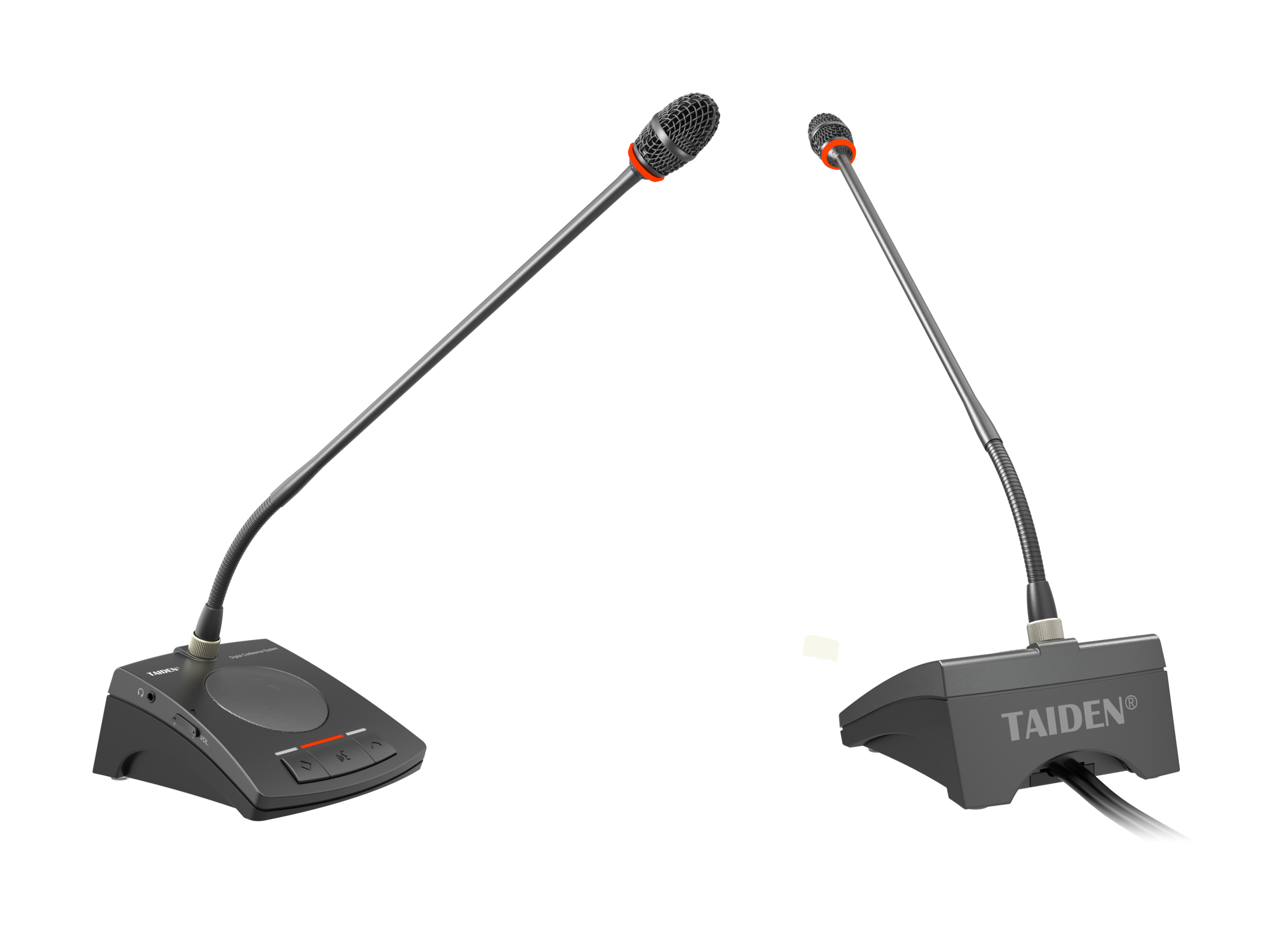
Going forward, the most useful lens is not “features,” but control of variables. Newer designs converge mic pickup, DSP, amplification, and device control. Instead of separate boxes, they run a single timing domain. That makes beamforming and acoustic echo cancellation more stable. It also keeps end-to-end latency low enough that talkers do not step on each other. When you evaluate a wireless conference room microphone and speaker system, look past the brochure. Ask how it manages RF congestion, how it shapes pickup in real time, and whether its updates can roll without taking the room down.
Under the hood, the new playbook is simple: fewer hops, smarter math, and safer power. Smarter math means adaptive noise suppression that learns the room’s floor noise, not just a static profile. Fewer hops means minimal A/D and D/A conversions, so the signal stays clean. Safer power uses PoE with headroom, so peak talker moments do not brown out devices. And yes, DSP is only half the story—good routing and QoS keep voice packets first in line during bandwidth spikes.
What’s Next
Expect next-gen arrays that steer more tightly at lower frequencies, improving warmth without booming tables. Expect speech models that identify rustle versus voice and suppress only the rustle. Expect systems that auto-calibrate for seating layouts in minutes, not hours—then store presets per team. The comparison is stark: legacy stacks ask you to fix problems by adding boxes; compact, integrated setups prevent those problems by reducing the room for error. Different philosophy, different outcomes—and yes, fewer support calls.
To choose well, track three metrics that actually move outcomes: 1) Intelligibility first: confirm a reliable STI or equivalent score across seats, not just at the head of the table. 2) End-to-end latency under load: measure round-trip delay with two talkers and live screen share. 3) Operational load: count the number of update points, PoE budget margin per port, and whether the system exposes APIs for room automation. If a candidate can’t meet those, keep looking. Your future meetings will thank you, and so will your help desk—and yes, really. For deeper exploration of integrated conference solutions, start with brands advancing this model, such as TAIDEN.