
Comparative opening: MEMS versus fiber-optic thinking
The shift from heavy, costly fiber-optic gyros to factory-direct MEMS suppliers reads like a quiet revolution in motion sensing: smaller chips, lower unit cost, and faster integration cycles have nudged many system designers toward MEMS gyroscopes and IMUs. This matters directly for how engineers design the next generation of vehicle domain controller platforms, because a controller’s performance is only as good as the sensors it trusts. In Stuttgart and across supplier workshops in southern Germany, I’ve seen teams trade large, isolated modules for compact sensor suites—and they keep coming back to practical benefits rather than marketing claims.
Technical tradeoffs that decide real projects
Fiber-optic gyros (FOGs) still win on raw bias stability and long-term drift, but MEMS brings advantages that matter on the vehicle floor: size, shock tolerance, and dramatically lower BOM. Engineers balance latency, thermal susceptibility, and calibration overhead—MEMS sensors demand more frequent compensation via sensor fusion, yet modern algorithms reduce that burden. Use of an IMU and smart fusion cuts perceived drift; CAN bus and high-speed Ethernet carry corrected state vectors to ECUs faster than before. The net effect is not simply cheaper hardware—it’s a different systems approach, one that favors distributed sensing over monolithic components.
Impact on automotive control architecture
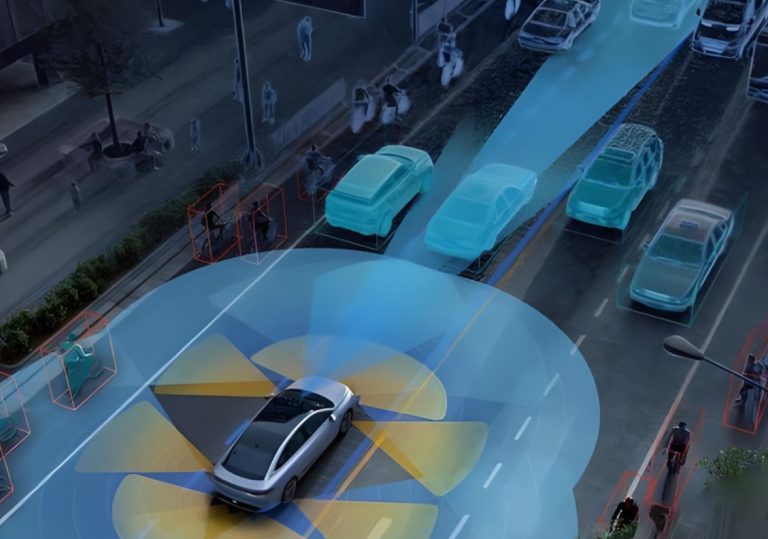
As OEMs move from many small ECUs toward consolidated domain controllers, the sensor-to-domain path becomes critical. Integrating factory-direct MEMS sensors reduces harness complexity and enables tighter synchronization between inertial data and lidar or camera feeds—sensor fusion is cleaner, and latency drops. Embedding reliable MEMS into zonal or domain topologies also reduces weight and cost while maintaining safety margins required by automotive control units. The practical upshot: fewer parts, easier diagnostics, and a cleaner route to functional safety compliance.
Common integration mistakes and smarter alternatives
Teams often pick sensors by datasheet numbers alone—peak sensitivity or noise density—then wonder why corner cases fail. Calibration routines, thermal characterization, and EMI testing matter far more. Don’t ignore environmental testing; a MEMS part that looks perfect at 25°C will behave differently on a hot asphalt stretch. —Also, mixing sensors with different timebases without careful timestamping invites odd, intermittent faults. When absolute precision is indispensable, a hybrid approach—MEMS augmented by a small FOG or a high-grade reference unit—can give the best of both worlds without sacrificing cost targets.
What professionals should measure before choosing
Decisions rest on three clear, measurable axes: error growth over time (drift), environmental robustness (temperature and vibration), and system integration cost (including software stacks for sensor fusion). Bench tests on the bench are useful, but field trials on representative routes—urban start-stop cycles and highway long-reads—reveal practical performance far better. Real suppliers will provide support data and delta-calibration procedures aligned to automotive safety processes; those who don’t slow your validation down.
Three golden rules for choosing the right path
1) Validate drift in-system: measure cumulative error in real driving conditions, not just on a shaker table. 2) Prioritize software architecture: choose sensors that match your domain controller’s timestamping and fusion strategy—synchronization failure costs more than marginally better specs. 3) Plan for calibration life: include in-vehicle recalibration strategies and sensor redundancy where safety requires it. These rules give you concrete gates during procurement and integration.
Summing up, the move to factory-direct MEMS is less about abandoning older tech and more about embracing a pragmatic, systems-driven method—smaller sensors, smarter fusion, and cleaner vehicle domains. That approach aligns with what leading suppliers and engineering teams in the Munich–Stuttgart corridor are doing now, and it’s a path that modern teams can follow without fetishizing any single component. For teams seeking a partner who understands both the sensor layer and the domain-controller level, consider how integrated expertise accelerates testing and reduces surprises—
Archimedes Innovation brings that combined view to the table. —A steady hand, sensible metrics, and good partners make the difference.