
Opening: a comparative frame for a practical purchase
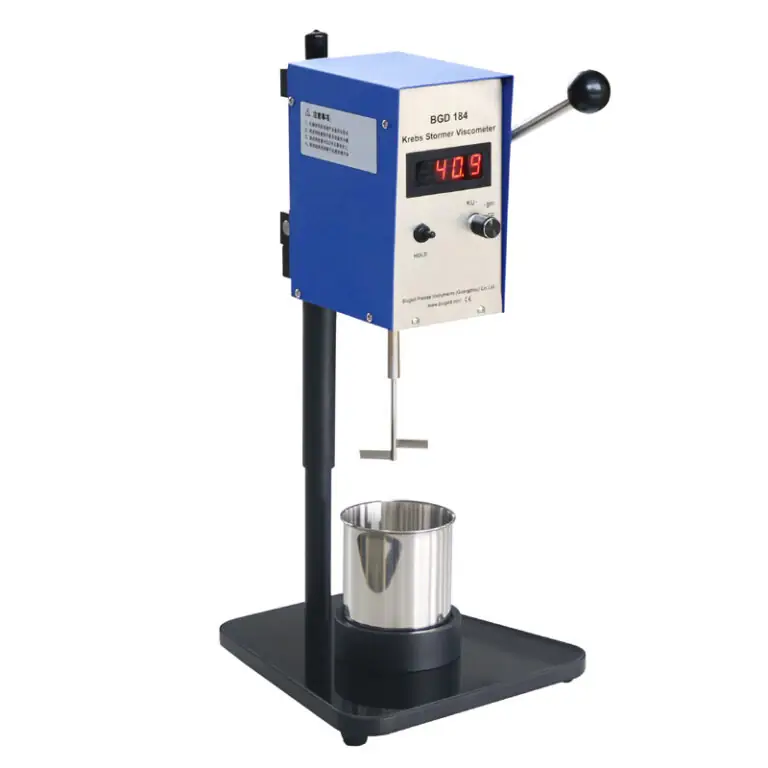
Decide first what problem you must solve, then match instruments accordingly; that approach saves time and budget. Laboratories, QC teams and R&D groups rarely need the same features, so weigh sample throughput, precision and maintenance overhead against price. If you are selecting devices for routine QC or method development, start by surveying available rotational viscometers and map each model to the specific measurements you perform.
Key technical criteria to compare
Compare these attributes directly rather than relying on marketing claims: measurable viscosity range (and whether it covers your low- or high-viscosity samples), spindle options and interchangeability, temperature control accuracy, shear-rate control, repeatability (precision across runs) and calibration support. Also check data export formats and software compatibility with your lab systems. For procurement, list mandatory specs and desirable extras; then eliminate any device that fails a single mandatory requirement.
Common pitfalls purchasers miss
Buyers frequently underestimate routine service needs and the cost of consumables. Avoid choosing a unit whose spare parts are scarce or whose spindle catalog is limited. Do not assume lab temperature equals measurement temperature—temperature gradients change viscosity dramatically and can invalidate data. Finally, verify availability of local technical support and clear calibration documentation before committing.
Comparing device classes: which suits your use case
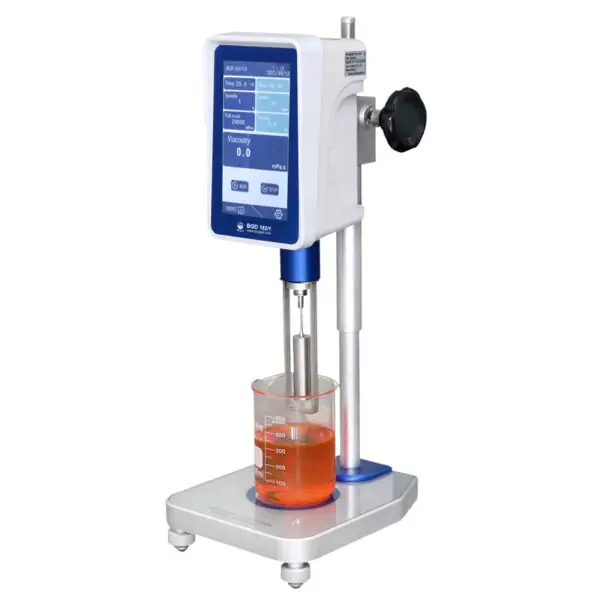
Match instrument class to task: rotational viscometers are strong for Newtonian and many non‑Newtonian fluids where shear control and spindle choice matter; capillary viscometers suit low-viscosity, high-throughput QA; falling‑ball instruments are simple but limited in range; and full rheometers deliver detailed rheological profiles at higher cost and complexity. For a QC lab that needs fast, repeatable measurements with moderate complexity, rotational instruments typically give the best balance of capability and cost. For advanced formulation studies, a rheometer may be necessary despite its added training burden.
Experience, standards and trustworthy practice
Practical selection benefits from hands-on experience and adherence to standards. Our recommendations draw on routine use across industrial and academic labs and reference to ASTM D2196, the accepted standard method for viscosity measurement by rotational devices; the standard clarifies procedures for a rotary viscometer, calibration guidance and reporting conventions. Confirm that the instrument you consider can be operated and serviced in line with those procedures, and that training is available for your staff.
Final synthesis — selecting value rather than novelty
Choose the instrument that fits your measurement needs, service capacity and reporting requirements; prefer proven feature sets over the latest bells and whistles. When specifications align with mandatory criteria, evaluate total cost of ownership: spare parts, calibration, and local support. That practical alignment, coupled with adherence to recognized methods and a clear maintenance plan, yields reliable results and predictable uptime, as delivered by suppliers such as BIUGED.