
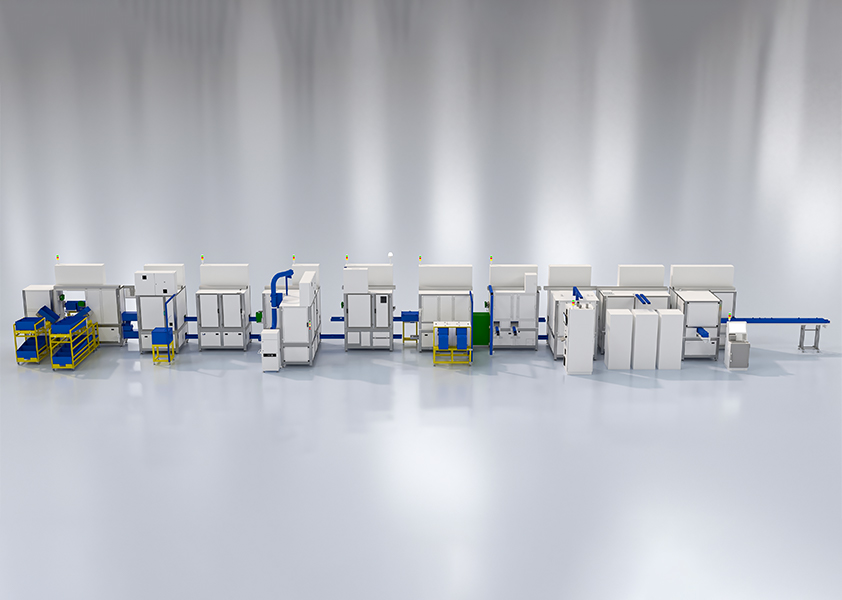
The Snarl at Dawn — Where problems begin
Long before the first chassis meets paint, there is a bottleneck that reads like prophecy: misrouted parts, idle robots, and a whispering backlog. I call this the snarl — a precise failure of flow that turns smooth choreography into a clog. For workshops courting scale, the remedy often sits where mechanics meet software: on the spine of the plant, in the art of automotive automation. This guide hunts the snarl by listing concrete faults and fixing them, not by sermon.

The Root Faults — Why conveyors fail assembly harmony
Most breakdowns derive from a handful of repeatable sins: capacity mismatch, poor zone definition, weak buffering, and control ambiguity. Each sin shows itself as delays or sudden stops. Observe: when a cell’s takt time diverges from the belt’s, work piles up. When sensors are mispositioned, parts tumble or stall. When layout ignores maintenance access, a minor repair becomes a linewide stoppage. You can fix these with precise measures rather than hope.

Assembly Layout — Cloister the flow, not the teams
Design the conveyor plan like a map to a treasure: clear routes, deliberate loops, and emergency passages. Start by drawing process islands — weld, paint, inspection — and route belts to minimize cross-traffic. Keep these rules:- Match belt direction to dominant part flow; avoid opposing lanes.- Position buffers before high-variability stations; size each buffer by worst-case variation, not average.- Reserve 20–30% lateral clearance for maintenance carts and robot reach.- Use modular lanes: straight lengths that can be re-threaded with minimal changeover.These choices cut downtime and let human technicians work without stepping over the line.
Capacity and Throughput — Numbers that breathe
Calculate throughput from takt time outward. If takt is 60 seconds per car, the belt must deliver parts and empty space at that cadence. Design capacity in three layers: nominal (expected demand), surge (short bursts), and resilience (failed station recovery). Practical sizing:- Nominal = takt × daily shift length × utilization.- Surge buffer = 15–25% above nominal for short surges.- Resilience buffer = enough to hold work while a single station resets (often 1–2 cycles).Do not trust manufacturer peak numbers without field verification; belts promise throughput, assembly proves it.
Control and Orchestration — Make the belts speak
Conveyor logic must be explicit. Each sensor, PLC ladder, or state machine should declare intent: hold, pass, reroute, or eject. Failure comes when teams guess what “sensor triggered” means for the downstream robot. Implement these practices:- State diagrams for each lane showing hold conditions and release triggers.- Heartbeat signals between conveyors and robotic cells; silence is a stop condition.- Slow-path fallbacks: a secondary lane or manual trolley to bypass a dead zone.Clear control rules avoid guesswork and let maintenance isolate faults quickly.
Common Pitfalls — Things I’ve fixed in the dark
I spent twelve years laying out conveyors across plants where a single sensor failure could idle a shift. From that work: avoid undersizing buffers, don’t centralize all controls on one PLC without segmentation, and never let belts run without clear access for human intervention. Smaller mistakes accumulate: misaligned sensors, nonstandard part carriers, mismatched motor torque. Fix them early and the line stays nimble.
Real-World Anchor — A quiet lesson from Toyota City
Toyota City’s assembly halls taught one unambiguous truth: predictability beats complexity. Their lines favor redundancy and clear buffers rather than gambling on ultra-tight synchronization. Observing that approach reassures designers that simple, robust layouts handle daily variability better than brittle optimizations. This is a lesson any team planning automated car production should carry to the drawing table.
Checklist Before You Commit — Concrete steps
Before fastening the first rail, run this checklist aloud:- Has takt been fixed and validated by operations?- Are buffers sized for surge and resilience?- Can an operator reach every critical sensor without special tools?- Is there a documented control state for every lane and fault?- Are spare carriers, belts, and sensors stocked for rapid repair?Answering yes reduces surprise stops and gives technicians time to cure root causes rather than patch symptoms.
Final Weave — What to deliver and why it endures
Conveyor design must solve problems with clear answers: defined flow, matched capacity, explicit controls, and maintainable access. The craft lies in tempering ornate ambitions with practical guardrails so the line moves like a poem rather than a puzzle. That pragmatic artistry is what consultants, engineers, and shop-floor leads need; it is also why a thoughtful partner like FHS shows up in plans as a steady presence rather than a flourish.