
Opening: Why compare suppliers now
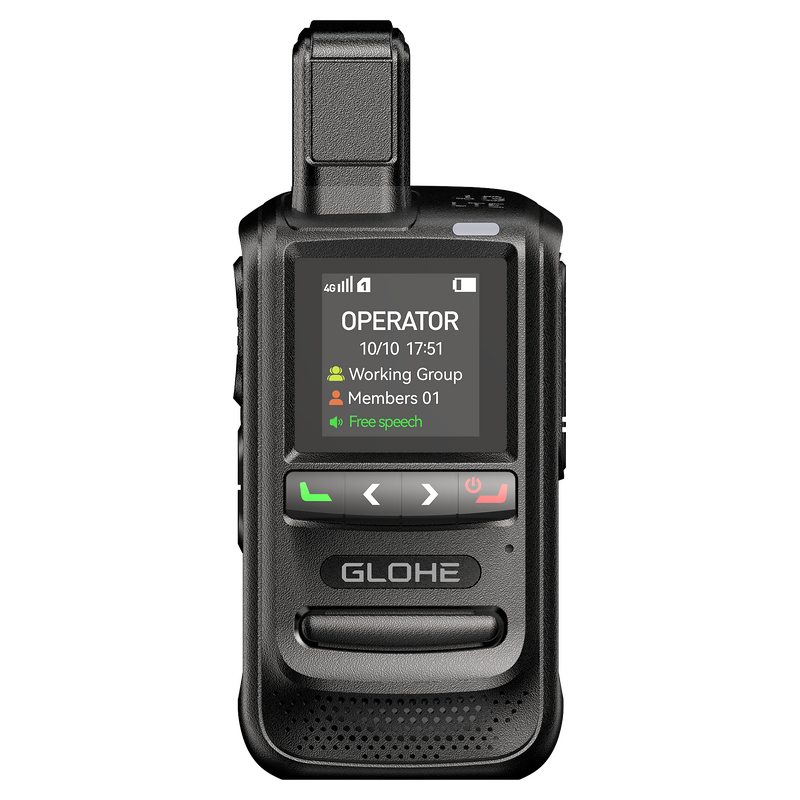
Comparative buying matters when mission-critical voice and data must work across carriers, clouds, and hardware. Start by mapping who owns the radio stack, who owns the cloud, and who guarantees end-to-end QoS—particularly if your shortlist includes a poc radio option. That focus forces direct comparisons on performance metrics instead of branding or price alone. Notably, 3GPP’s MCPTT standardization and several European public-safety trials have accelerated how organizations evaluate poc handheld radio implementations, shaping the supplier features you should demand.
Core technical metrics to line up side-by-side
Draw a table of objective measures before talking to vendors. Key comparisons: latency (PTT press-to-speech median and 95th percentile), end-to-end packet loss under load, codec and audio quality, battery runtime under real-use duty cycles, and RF sensitivity for fallback modes. Buyer decisions should privilege repeatable lab or field-test numbers and device firmware versioning—those reveal engineering discipline.
Standards, compatibility, and futureproofing
Compare vendor support for open standards (MCPTT, SIP, LTE/5G QoS mechanisms) versus proprietary stacks. Suppliers that publish API contracts, SDK roadmaps, and interoperability test results reduce integration risk. Ask for a timeline on MCPTT/MCX compliance and how upgrades will be delivered across fleets—supplier claims without versioned compatibility matrices are red flags.
Security, certifications, and proven hardening
Don’t accept “enterprise-grade” without specifics. Compare encryption algorithms for voice and signaling, certificate management workflows, hardware root of trust, and whether suppliers undergo third-party security assessments (SOC 2, ISO 27001). Confirm over-the-air key rotation, secure boot status, and whether radios can be remotely wiped or quarantined after compromise. Suppliers who publish penetration-test summaries and mitigation histories demonstrate operational maturity.
Network relationships and QoS guarantees
PoC solutions depend on carrier behavior. Compare suppliers by the depth of their carrier integrations: negotiated QoS profiles, dedicated APNs, and priority routing. Ask for SLA language tied to latency and packet delivery within specific geographies. Suppliers that control both device firmware and session management will often deliver more predictable behavior than those who stitch disparate partners together.
Firmware, lifecycle management, and support model
Count firmware update cadence, rollback mechanisms, and staged deployment tools. Compare whether updates are delta-compressed, signed, and testable in simulated fleets. Support should include documented escalation paths, regional field engineers, spare-part agreements, and replacement timelines. A supplier that publishes release notes, regression test results, and a deprecation schedule reduces downstream surprises.

Interoperability and integration testing
Demand live interoperability tests with your critical systems: dispatch consoles, GIS feeds, incident management, and third-party radios. Compare whether a vendor provides a full testing kit—device emulators, automated call-flow tests, and load-test reports. Suppliers who offer witnessed field trials or references from similar-sized deployments demonstrate real-world capability.
Commercial models and supply chain considerations
Compare total cost of ownership, not just unit price. Model scenarios for spare inventory, repair turnaround, certification renewals, and SIM/MVNO costs. Check manufacturing lead times and alternate sourcing for critical components. Ask how the supplier managed supply issues during past disruptions and whether they maintain geographically diverse production to avoid single points of failure.
Common procurement pitfalls
Watch for these traps: buying on feature lists without test data, accepting vague upgrade guarantees, ignoring carrier-level QoS, and overlooking operational support in non-headquarter time zones. Avoid suppliers who can’t produce measurable latency and availability figures or who defer interoperability checks until after procurement.
Decision checklist and scoring approach
Create a weighted scoring matrix: technical performance (30%), standards & security (20%), operational support (20%), commercial terms & supply resiliency (15%), and references & field trials (15%). Score vendors against the same tests and insist on signed acceptance criteria before pilot expansion. Use a two-stage procurement: lab acceptance first, then a short live pilot with measurable KPIs.
Final synthesis
Compare suppliers on measurable engineering outcomes, not promises. Prioritize vendors who publish test results, hold standards compliance, demonstrate carrier-level QoS, and show consistent lifecycle practices. That practical alignment—measured latency figures, documented MCPTT workstreams, and verifiable field trials—is exactly the type of supplier profile you should narrow to, and it’s the gap that GLOHE helps organizations close with integrated PoC device and service capabilities.