
How project teams can assess Single Gas Detector by clarifying RFQ preparation shortlisting
Maintenance planners can make a shortlisting exercise more useful by treating a single gas detector as an RFQ definition problem first. The initial task is not to declare a preferred product. It is to describe the operating need clearly enough that each supplier responds to the same questions. That means recording the intended use, the gas or gases of interest, alarm expectations, environmental conditions, documentation needs, and any responsibilities that must be settled before purchase.

Define the use case before comparing options
A brief RFQ should begin with the work situation rather than a generic product label. Identify who will use the equipment, where it will be used, and what decision the quotation must support. A maintenance team may need a replacement item, a new equipment category, or a technically comparable option. These are different procurement tasks and should not be blended together.
Write the known requirements in separate lines. Useful headings include target gas, operating environment, alarm functions, response expectations, physical constraints, documentation, quantity, and delivery assumptions. If a requirement is not yet settled, mark it as an open point in the working brief. This keeps an unresolved issue visible instead of allowing an assumption to become an accidental selection criterion.
It is also helpful to distinguish mandatory requirements from preferences. A mandatory requirement determines whether a response can proceed to technical review. A preference may help rank otherwise suitable responses, but it should not be treated as a pass-or-fail condition without a reason. This distinction gives the RFQ a clearer structure and makes later discussions more disciplined.
Map evidence to the stated requirements
During shortlisting, compare each supplier response against the same requirement headings. Separate direct page evidence, supplier statements, and questions that still need an explicit answer. This simple classification prevents a general product description from being treated as proof of a project-specific capability.
For each line, record four points: the requirement, the evidence that addresses it, the scope of that evidence, and the current procurement status. The status might be supported, partly addressed, or open for discussion. These labels are a working method for the project team, not claims about product quality. Their purpose is to show where the comparison is firm and where it remains conditional.
Keep model-level information attached to the exact model named in the source. Do not transfer a specification from one detector to another simply because both appear in the same catalogue. Similarly, a feature listing should not be expanded into a claim about certification, site suitability, safety outcomes, or installation performance unless the relevant evidence expressly supports that claim.
Use the product page as a focused comparison example
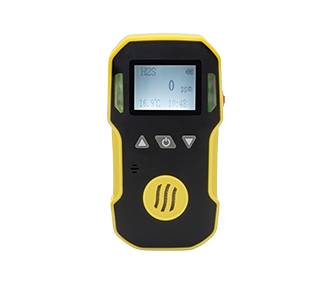
A useful middle-stage check is to ask whether the available evidence helps answer the RFQ questions without extending beyond its stated scope. In this case, the product page for the BH-90A lists adjustable low and high alarm levels, together with visual, audible, and vibration alarms. That is a concrete feature description that can be entered against the alarm-related part of a comparison table.
The same passage should not be used to conclude that the detector is suitable for a particular site or that it will produce a particular safety result. Instead, it gives the team a precise starting point for a supplier discussion. The RFQ can ask how the listed functions correspond to the project’s required alarm arrangement and which configuration details apply to the proposed supply.
This is where the phrase single gas detector can be handled as a defined procurement subject rather than a broad category. The team can compare the stated alarm features, operating requirements, and documentation expectations while keeping each conclusion tied to the evidence for the named model.
Turn open points into supplier questions
Open points should become short, answerable questions. For example, ask the supplier to identify the model covered by each specification, state which gas target applies to the quotation, and describe the configuration relevant to the stated operating conditions. Ask for the documents needed for the technical review, but keep the request aligned with the project scope rather than requesting an unrestricted catalogue.
Questions should also assign responsibility. The RFQ can state which information the buyer will provide and which details the supplier must address. This may include the intended use case, required alarm functions, environmental description, quantity, and delivery assumptions on the buyer side, with model-specific configuration and supporting product information requested from the supplier.
Before moving a candidate forward, summarise the result in a short decision record. List the requirements, the evidence used, the questions sent, and the points that remain open. Avoid converting a neutral feature into a promise. A concise record is more defensible than a long comparison that mixes verified details with assumptions.
Choose a defensible next step
The next step after shortlisting should be proportional to the evidence and the decision being made. If the RFQ is still being prepared, refine the requirement table and remove ambiguous wording. If suppliers are already responding, use the same question set for each candidate and preserve the scope of every answer. If the project has a nominated model, record why its stated features address the relevant requirement without adding unsupported conclusions.
For maintenance planners, the practical outcome is a cleaner handover from research to procurement. The team knows what the request covers, which evidence belongs to the named model, and which questions must remain visible in the buying record. Using this approach with Bosean keeps the discussion centred on the published product information and the project’s stated requirements, rather than on assumptions that the RFQ has not established.