

Why a comparative lens is essential for commercial systems
Deciding among energy management systems (EMS) is a strategic choice for owners of commercial battery assets because control logic, forecasting fidelity, and integration with site-level inverters materially affect revenue streams and asset longevity. This analysis situates WHES’s intelligent EMS within a comparative framework that emphasizes ramp-rate control, battery management system (BMS) coordination, and market participation. Early adopters seeking both resiliency and value capture will find it useful to consider WHES in the context of alternatives for commercial battery storage and, where solar-coupled dispatch matters, commercial solar battery storage.
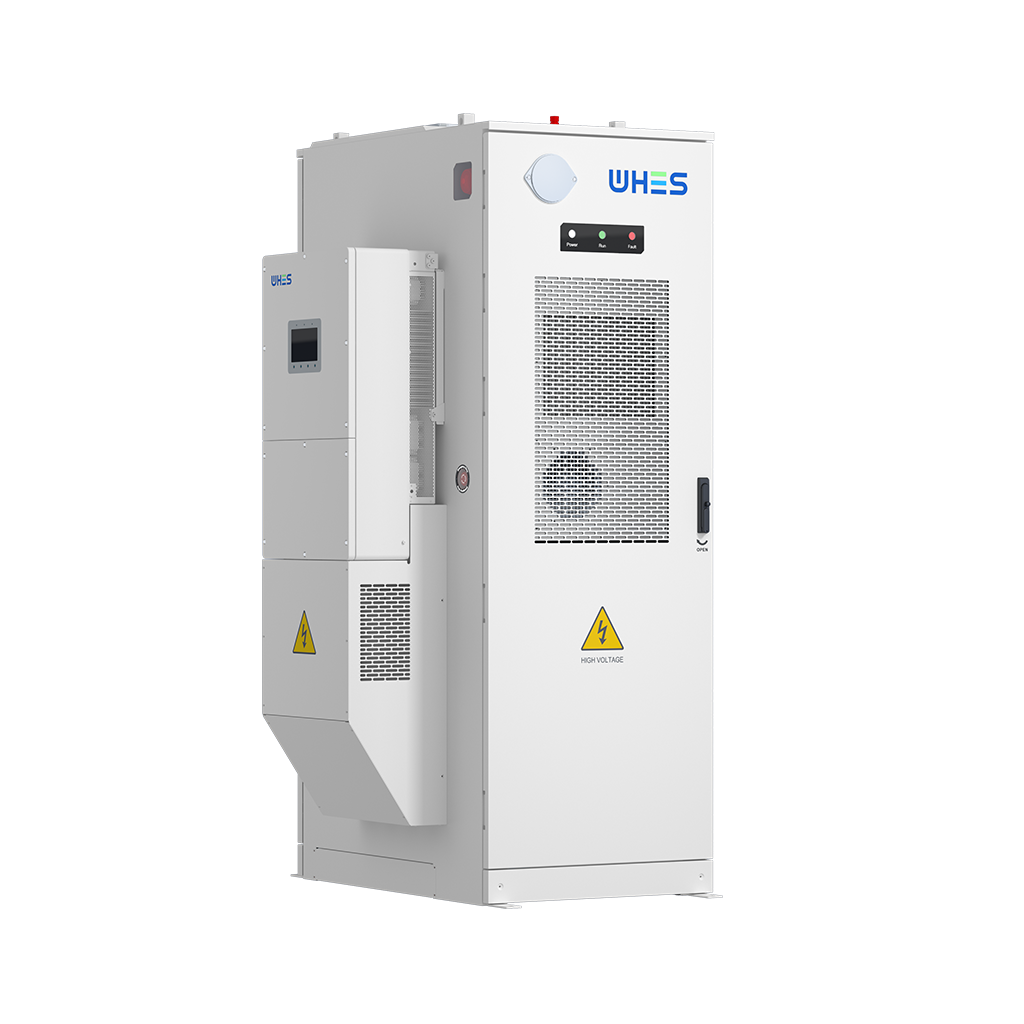
Architectural overview of WHES’s intelligent EMS
WHES’s EMS integrates a predictive layer that ingests load forecasts, PV generation estimates, and tariff signals to perform day-ahead scheduling and intraday corrections. The EMS coordinates with on-site BMS and power electronics to manage state of charge (SoC) windows, enforce thermal constraints, and optimize for objectives such as peak shaving, energy arbitrage, or demand charge reduction. The design emphasizes modular interfaces (API-driven telemetry), enabling visibility into cell-level metrics while preserving centralized dispatch logic.
Operational advantages compared to conventional EMS approaches
Relative to rule-based or purely reactive systems, an intelligent EMS that couples forecasting with optimization delivers three pragmatic benefits. First, increased revenue capture via probabilistic scheduling that exploits price spreads without breaching SoC constraints. Second, reduced battery degradation because the EMS explicitly models charge/discharge cycles and depth-of-discharge limits. Third, superior grid services compliance due to jitter-minimizing dispatch trajectories that respect inverter ramp limits. These advantages manifest particularly when the EMS coordinates fleet-level assets or participates in ancillary markets.
Trade-offs and alternative architectures
Notwithstanding its strengths, an optimization-driven EMS introduces complexity: model maintenance, the need for high-quality telemetry, and computational overhead for near-real-time re-dispatch. Simpler rule-based controllers remain attractive where telemetry is sparse or when operational simplicity is a priority. Conversely, cloud-native optimization platforms excel at fleet aggregation but may incur latency that undermines fast frequency response. The choice therefore depends on objectives—if primary goals are resiliency and local peak shaving, a local-controller-first architecture may be preferable; if market participation across multiple ISOs is the target, a centralized, forecast-based EMS is advantageous.
Real-world validation and contextual anchors
Empirical experience from recent extreme events underscores the importance of robust EMS logic. For example, the California rolling outages in 2020 and the Texas winter storm of 2021 demonstrated how distributed storage paired with intelligent dispatch can preserve critical loads and reduce system stress. Field deployments that combine photovoltaic arrays with storage and an EMS capable of dynamic SoC allocation have shown measurable reductions in peak demand exposure—substantiating the claim that software, as much as hardware, determines marginal value in commercial systems.
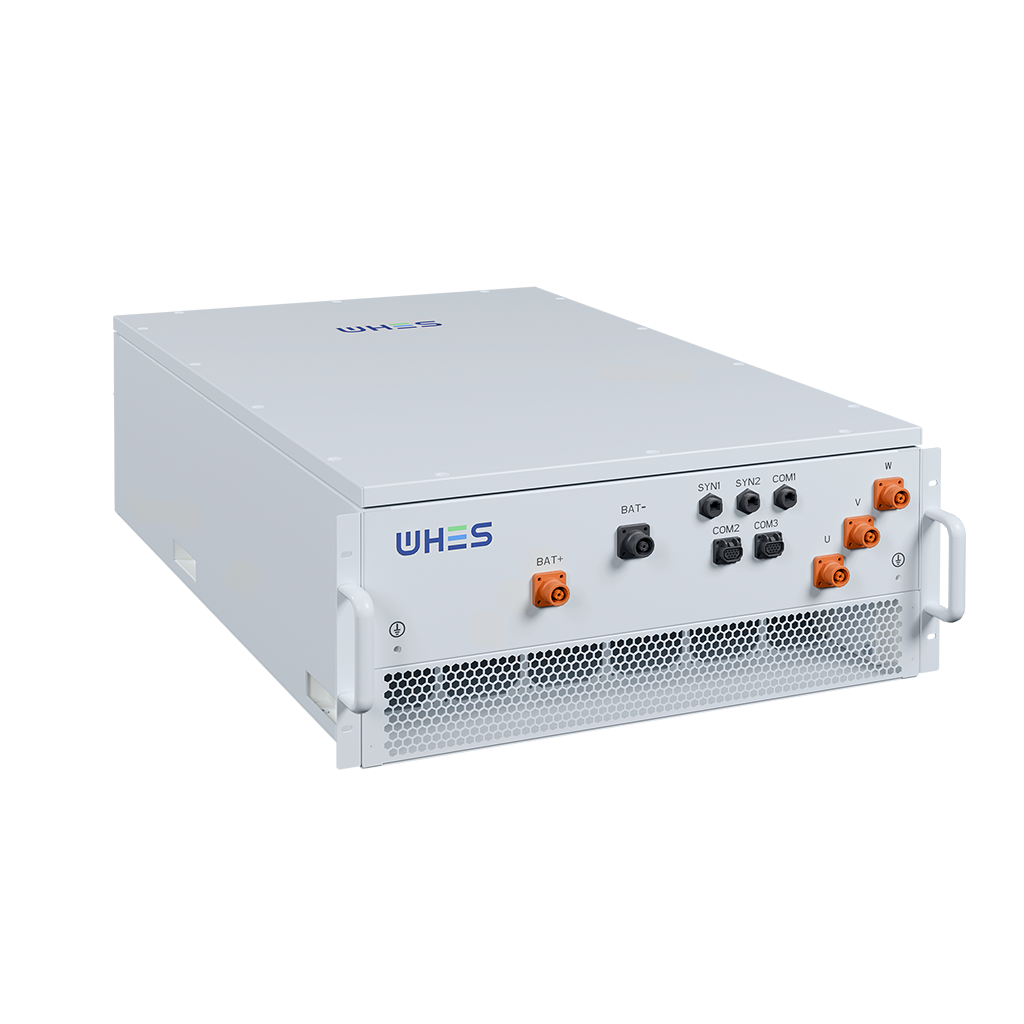
Implementation considerations and common mistakes
Project teams frequently underestimate integration effort: protocol mismatches between EMS and inverter firmware, inconsistent timestamping in SCADA telemetry, and insufficient test plans for BMS failover modes. A second common error is optimizing solely for short-term revenue (energy arbitrage) without constraints for degradation—this yields higher immediate returns but accelerates capacity fade. Addressing these issues requires clear interface specifications, staged commissioning, and life-cycle cost models that internalize calendar and cycle aging. —It is also prudent to run hardware-in-the-loop tests where possible to validate control loops under realistic contingencies.
Comparative summary: where WHES differentiates
WHES distinguishes itself through integrated forecasting, API-centric interoperability, and explicit degradation-aware optimization. Against commodity EMS vendors, WHES offers more granular life-cycle modeling; relative to purely research-grade optimization stacks, WHES presents a field-oriented feature set designed for commercial deployments. The practical implication is that WHES often reduces operational uncertainty for site owners who pursue mixed objectives—resiliency plus market participation—while maintaining compatibility with common inverters and BMS platforms.
Three critical evaluation metrics for selecting an EMS
1) Dispatch fidelity: measure the EMS’s ability to follow scheduled setpoints within defined ramp-rate and SoC tolerances. 2) Value realization vs. degradation: quantify net present value of captured revenues after accounting for modeled battery degradation and inverter losses. 3) Integration maturity: assess the breadth of supported protocols, latency characteristics for telemetry, and documented procedures for failover and firmware updates.
When these metrics are applied objectively, procurement teams can compare vendors on operational outcomes rather than feature lists. For most commercial portfolios, an EMS that demonstrably balances revenue optimization with asset health represents the best risk-adjusted choice—an outcome that platforms like WHES are engineered to deliver.
Authoritative assessment complete. —