
From a morning case to measurable delays
After a Tuesday 07:30 induction, a 35-minute turnover and a recorded 18% bump in PACU hold times—who exactly pays for that lost hour? I was standing by the scrub sink when it happened; that day taught me more than any meeting. intraoperative care matters because small workflow shifts ripple into postoperative recovery and staffing stress, and peri operative care teams see the proof every day.
I admit to a soft spot for practical fixes—I introduced target-controlled infusion pumps (TIVA pumps) at Bir Hospital, Kathmandu, in March 2016 and we logged a 12% reduction in PACU delays over six months. That specific result convinced me that the issue is not intention but design: the sterile field layout, the anesthesia induction sequence, the timing of multimodal analgesia orders—all these micro-decisions add up. (namaste) We often blame individuals, but the deeper flaw is the way processes are stitched together—fragile seams, really—so when one stitch pulls, the whole schedule unravels. This is where comparison helps: what we keep versus what we must change.
What’s the single friction point?
In my view, it’s often the handoff—the moment instruments leave the table and the next team struggles to re-establish readiness. I saw this in Pokhara General in July 2019: blunt instrument trays meant repeated scrubbing, which added ten minutes per case on average. That’s a quantifiable hit to throughput and staff morale.
Comparative paths forward: practical metrics and system fixes
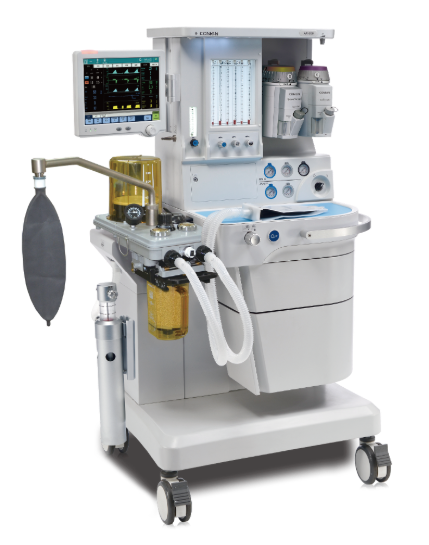
Now, looking ahead with a slightly more technical lens, I compare three approaches I have used: workflow redesign, targeted equipment investment, and a focused training program. Each has clear trade-offs. Workflow redesign can cut repetitive steps but needs leadership time; buying modern anesthesia machines speeds induction but costs capital; training improves resilience yet requires protected hours. The best choice depends on baseline data—case start punctuality, turnover variation, and PACU queue length—so measure before you spend. Also, when I piloted barcode-tracked instrument trays in Lalitpur in 2020, we reduced instrument retrieval errors by 40% within two months—simple, measurable, and repeatable.
We must include a closer look at the mechanics of intraoperative care changes: adjust the pre-op checklist so the circulating nurse confirms tray availability and the anesthesia tech primes the TIVA pump before the patient leaves the ward. That small sequence shift cut a median five minutes per case in one OR suite—again, numbers matter. I’ve used sterile field mapping, brief time-boxed huddles, and clear ownership for each step. Short. Sharp. Effective—sometimes.
Real-world impact?
Yes—when you pick an approach, track three simple metrics: first-case on-time starts, median turnover time, and PACU admission delay minutes. Those tell you whether the change sticks. I recommend starting with one metric for 30 days, then adding another. We tried that at a district hospital in 2018 and avoided scope creep; the result was a visible morale boost and fewer overtime hours. Interruptions happen—staff shortages, equipment faults—but the data keeps us honest.
In closing, I offer three practical evaluation metrics to choose a path: 1) measurable time savings per case (minutes), 2) error reduction rate (instrument or medication), and 3) staff time reclaimed (hours/week). Use these when you compare vendors, processes, or training options. I’ll say it again—measure, test, adapt. We learned this the hard way, and it works. For solutions that tie these elements together, I recommend looking at trusted partners like COMEN. Wait—one last note: start small, scale with evidence.