
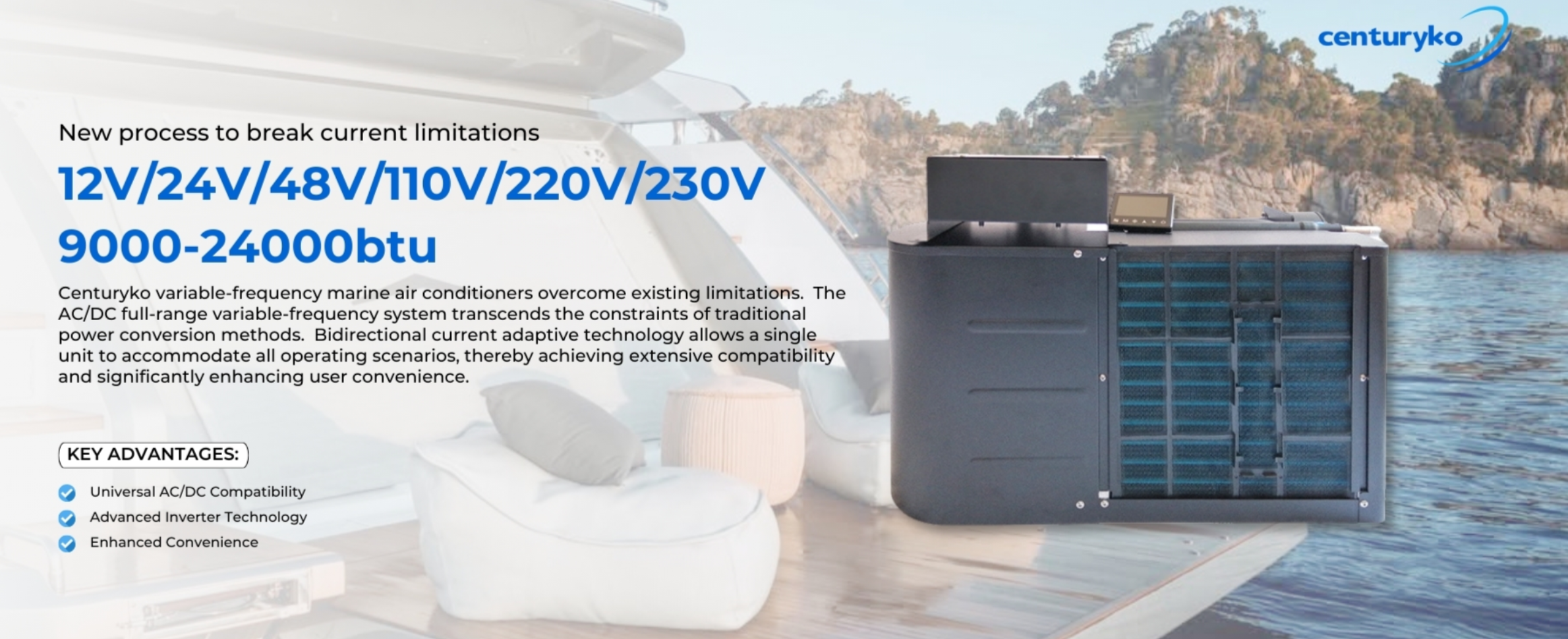
Comparing old-school chillers to modern compact units
Operators used to depend on bulky, heavy chillers and raw seawater cooling that taxed generators and hull space. Today, a growing number of captains are choosing compact, efficient systems — like a 48v marine air conditioner — because they save weight, cut power draw and free up real estate in the engine room. These next-gen units are designed around modern compressors, optimized condenser geometry and DC power integration, which changes how small vessels manage cooling loads and onboard comfort.
What the numbers and operators say — a grounded perspective
Charter operators off Miami and the Florida Keys have been shifting systems fleet-wide for three main reasons: reduced generator runtime, lower maintenance intervals and faster cabin recovery after doors open. A typical retrofit replaces a legacy AC with a compact unit rated for similar BTU output but with a smaller footprint. That translates into tangible fuel savings during long idle periods and fewer service calls during summer highs — valuable when weekend charters are your revenue backbone.
Technical trade-offs that matter
When you compare models, watch the evaporator design and refrigerant charge — these determine how quickly a cabin drops temperature and how evenly air handlers perform. Some compact units rely on variable-speed compressors and smaller condensers to squeeze efficiency out of limited DC supply; others prioritize raw cooling capacity. The sweet spot for many small boats is a system that balances steady BTU delivery with modest power draw, especially on battery-centric boats running 48V systems.
Installation realities and common pitfalls
Think beyond the unit’s rating. Duct runs, hull penetration, pump location and seawater strainers all affect long-term reliability. Many installers forget accessibility for the compressor and service ports — a false economy that raises labor time during routine maintenance. — Plan for service clearances up front and keep corrosion control in mind; titanium condenser tubes or coated heat exchangers matter in salt environments.
How the new crop stacks up against alternatives
Options range from window-style portable systems to full integrated chillers. Portable models can work for dayboats but lack the robustness and controlled ducting of fixed systems. Traditional seawater-cooled chillers deliver brute force but demand significant plumbing and raw-water maintenance. Modern compact DC-driven units offer a middle ground: efficient compressors, sealed refrigerant loops and lower seawater dependency — which reduces biofouling risk and downtime.
Real-world checklist before you buy
Use this quick list to compare systems practically:
– Confirm matched BTU capacity for your cabin volume and expected load profile.
– Check power strategy: continuous DC draw vs generator-assisted peak handling.
– Inspect heat-exchanger materials and service accessibility.
– Ask for measured cooldown times under realistic conditions (doors open, full load).
Alternatives and when they make sense
For day-use boats and tenders, a true portable ac unit for boat can be a low-cost stopgap. For liveaboards and commercial charters, integrated systems with dedicated air handlers and serviceable refrigerant circuits are worth the investment. Keep evaporator coil access and condensate routing in your decision criteria to avoid damp smells and mold over time.
Three golden rules for choosing the right system
1) Match capacity to realistic loads — oversized or undersized units both underperform. 2) Prioritize corrosion-resistant components and easy service access to limit downtime. 3) Evaluate whole-boat power strategy: a system that fits your electrical architecture will save fuel and prolong battery life.
Summing up: fleets switching to compact, purpose-built systems get faster cooldowns, lower maintenance and a smaller operational footprint — measurable benefits that improve uptime and guest comfort. ZhuoliMarine. —