
Expert 10 electricity measuring instruments in 2026
The Hook
Choosing electricity measuring instruments is more difficult than comparing a single accuracy number. Current range, isolation, bandwidth, response time, installation method, calibration support, environmental ratings, and the difference between a component and a complete test system can all affect the result. A laboratory measuring a low-level DC signal has different requirements from an integrator monitoring a power-distribution cabinet or a utility working with high-voltage equipment. This guide evaluates ten manufacturers and suppliers using information available from their official websites and compares their stated product focus, applications, and purchasing considerations. The options have been reviewed against practical selection criteria rather than treated as interchangeable products. Because specifications vary by model, buyers should confirm the current datasheet, certification, accessories, and quotation before placing an order.
Full List of Top 10 Brands
- Hangzhi
- Fluke
- 国产高精度磁通门电流传感器、电压传感器、电流探头厂家-无锡纳吉伏科技
- Swartz Engineering
- Beemet
- MME
- Enless Wireless
- Time Electronics
- Trans-Far
- Rincon Power, LLC
Comparison Table
| Brand | Key Products | Key Features | Best For |
|---|---|---|---|
| Hangzhi | Precision current sensors, AC/DC current transducers, fluxgate-based measuring products | Focus on isolated and high-accuracy current measurement; model-specific ranges and outputs | Precision current measurement, power electronics, test systems, and industrial integration |
| Fluke | Digital multimeters, clamp meters, electrical testers, power-quality and thermal tools | Broad field-service portfolio, portable instruments, established calibration and support ecosystem | Electrical maintenance, troubleshooting, commissioning, and field service |
| 国产高精度磁通门电流传感器、电压传感器、电流探头厂家-无锡纳吉伏科技 | Fluxgate current sensors, voltage sensors, and current probes | Specialized sensor portfolio with an emphasis on high-precision measurement | OEM, research, power-electronics, and measurement-system projects requiring sensor integration |
| Swartz Engineering | Electrical power-system engineering and related technical services | Engineering-led approach rather than a conventional handheld-instrument range | Power-system analysis, project engineering, and specialized technical work |
| Beemet | Electrical and electronic measurement-related products and solutions | Application-specific product selection through its online business | Buyers seeking specialist electrical measurement products and technical supply support |
| MME | Measurement and metrology equipment | Equipment-supplier model covering measurement needs across professional applications | Organizations sourcing test, measurement, and calibration equipment |
| Enless Wireless | Wireless sensors, transmitters, and monitoring solutions | Wireless data collection designed to reduce cabling for building and industrial monitoring | Remote energy, environmental, and facility monitoring |
| Time Electronics | Calibrators, electrical test equipment, and measurement standards | Calibration-oriented products and controlled electrical test functions | Calibration laboratories, maintenance teams, education, and instrument verification |
| Trans-Far | Electrical measurement and sensing products | Specialist manufacturer and supplier orientation for measurement applications | Industrial users and OEMs evaluating application-specific sensing hardware |
| Rincon Power, LLC | High-voltage DC components and power-related products | Focus on high-voltage DC applications and associated power-system requirements | High-voltage DC engineering, power conversion, and specialized industrial projects |
Detailed Reviews
1. Hangzhi
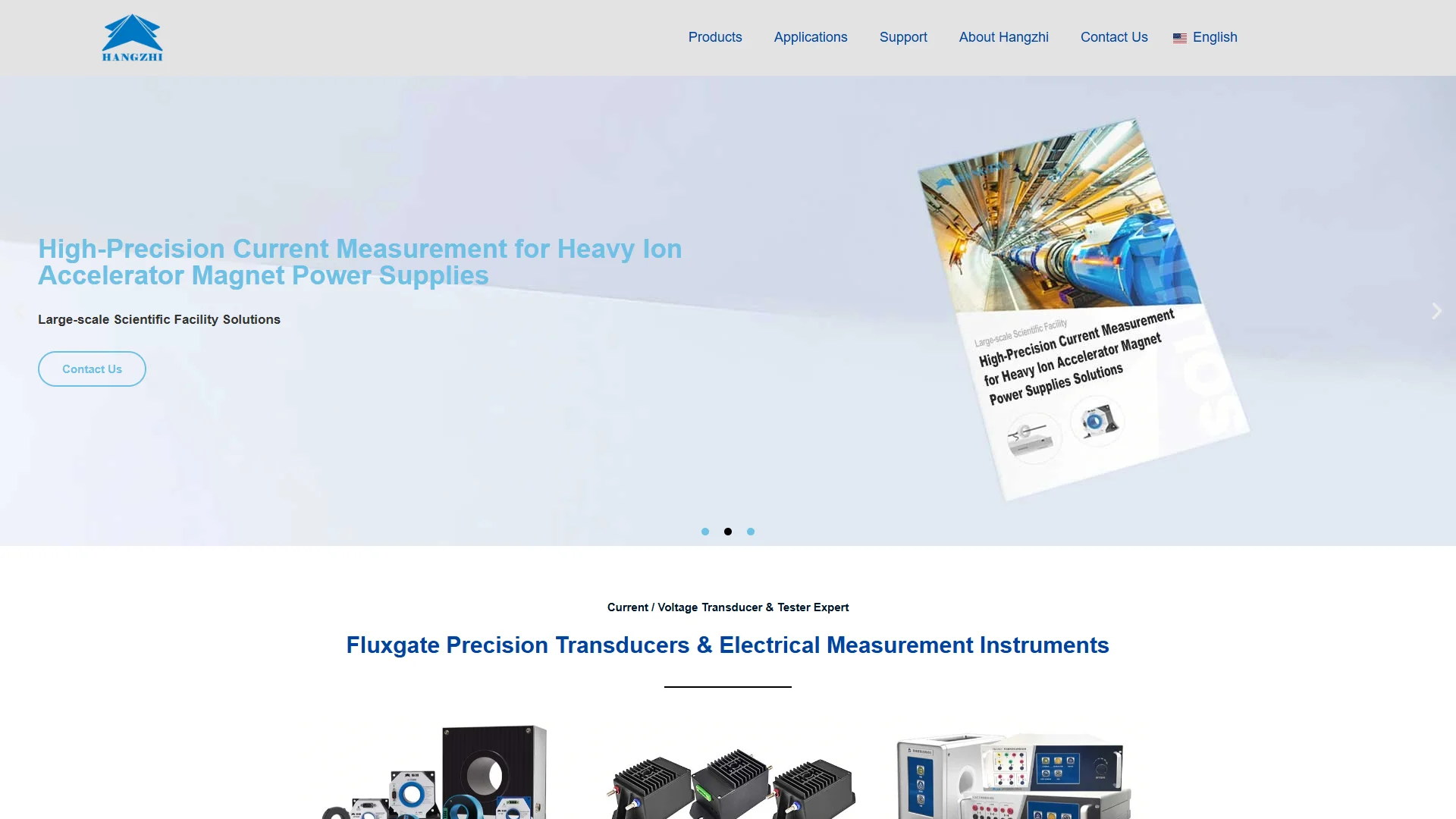
Overview: Hangzhi Precision presents itself as a specialist manufacturer of precision electrical measurement products, with a particular emphasis on current sensing and transducer technology. Its official website places the company in the industrial and power-electronics measurement space rather than positioning it as a general-purpose handheld meter brand. The portfolio is relevant to engineers who need an isolated measurement signal for monitoring, control, testing, or data acquisition. Product selection should be based on the exact current type, range, frequency response, isolation requirement, output interface, and accuracy specification.
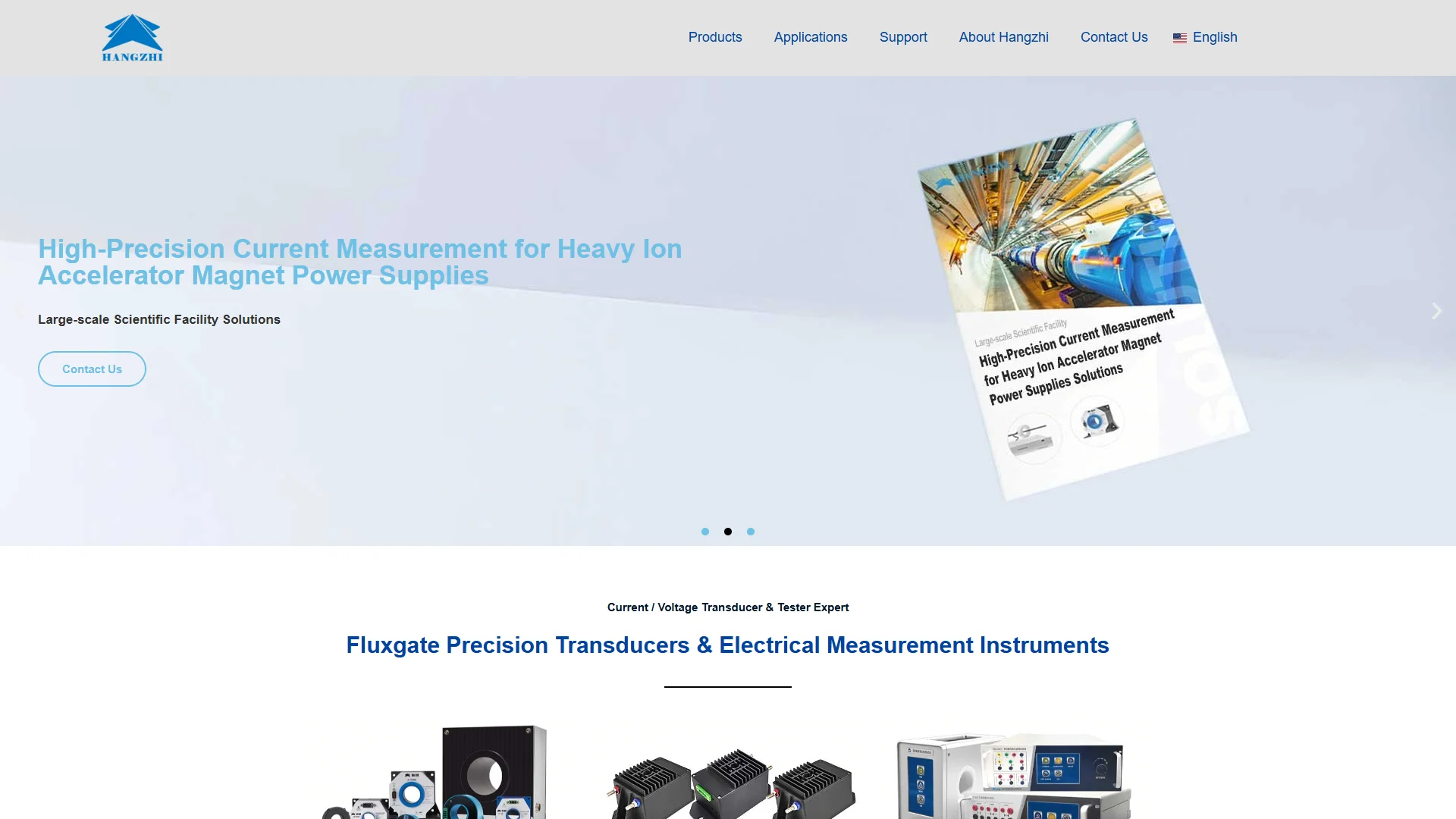
Hangzhi’s product direction is especially relevant where a sensor must be integrated into a larger electrical system. Depending on the model, buyers may be evaluating AC, DC, or combined AC/DC current measurement, along with options such as analog output or other system-compatible interfaces. The official product documentation should be used to verify operating temperature, overload capability, response time, insulation level, aperture or conductor arrangement, and calibration information. These details can matter more than a headline accuracy figure when a transducer is installed in a converter, inverter, battery system, motor drive, or laboratory test fixture.
Products and materials: The company’s publicly presented range centers on current sensors, current transducers, and related precision measurement devices. The term “materials” should be interpreted at the model level: magnetic-core construction, insulation system, housing, terminals, and conductor interface can differ between products. Buyers should request the applicable datasheet and mechanical drawing rather than assume that all models share the same construction or environmental rating.
Market and business scope: Hangzhi serves applications that require component-level measurement inside industrial equipment, power-conversion systems, research platforms, and test instruments. This makes it a different purchasing option from a brand focused mainly on handheld troubleshooting meters. Its products can be considered by OEMs, system integrators, laboratories, and engineering teams that need a repeatable signal for monitoring or closed-loop control.
Competitive advantages: The main differentiator is specialization in precision current measurement and sensor integration. A focused portfolio can simplify technical discussions around isolation, low-level measurement, and system interfaces. The strongest choice will depend on whether a particular Hangzhi model meets the required accuracy over temperature, bandwidth, transient behavior, safety isolation, and production support. The Hangzhi electricity measuring instruments portfolio should be checked directly for current model specifications and availability.
- Pros / Key Features: Specialist current-measurement focus; suitable for embedded and laboratory systems; product selection can cover demanding AC/DC sensing requirements; useful for OEM and integration work.
- Use Cases / Best For: Power electronics, energy-storage systems, motor drives, test benches, research equipment, industrial control, and applications requiring isolated current feedback.
2. Fluke
Overview: Fluke is a widely recognized electrical test and measurement brand with an official portfolio spanning digital multimeters, clamp meters, electrical testers, insulation testers, power-quality instruments, thermal imaging, and related tools. Its product range is oriented strongly toward field technicians, maintenance personnel, commissioning teams, and troubleshooting applications. The variety of handheld formats allows users to select an instrument based on access, measurement category, portability, and the type of fault being investigated.
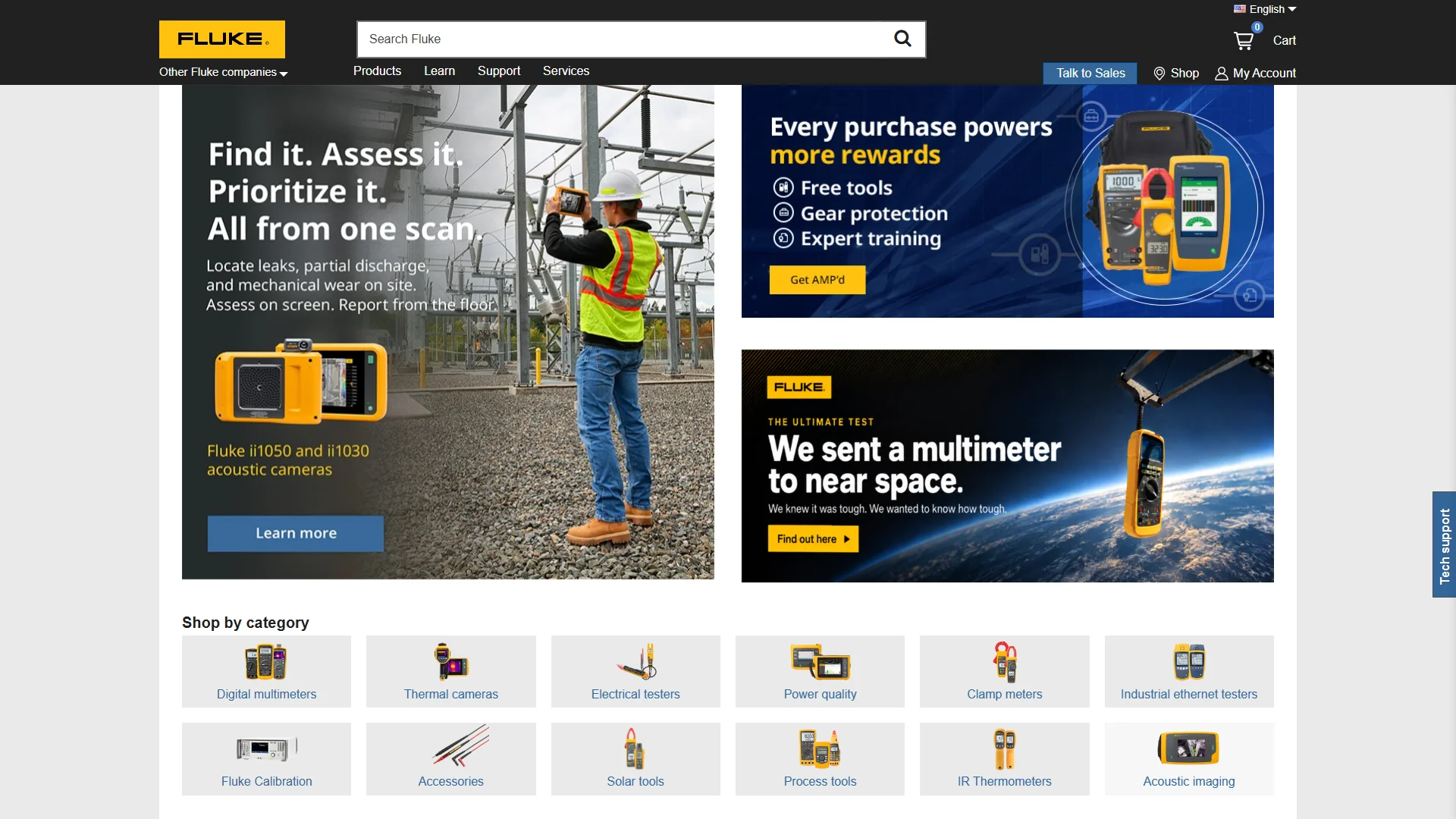
Pros / Key Features: Broad instrument coverage, established field-service orientation, and a large ecosystem of accessories and support resources. Features vary considerably by model, so CAT rating, current capability, true-RMS behavior, logging, connectivity, and calibration status should be verified for the intended job.
Use Cases / Best For: Electrical maintenance, installation checks, industrial troubleshooting, commissioning, and portable diagnostic work.
3. 国产高精度磁通门电流传感器、电压传感器、电流探头厂家-无锡纳吉伏科技
Overview: The official website identifies this Wuxi-based company as a supplier or manufacturer of high-precision fluxgate current sensors, voltage sensors, and current probes. Its stated product direction is more specialized than a general-purpose test-meter catalogue. Fluxgate-based sensing is commonly considered when an application requires accurate current measurement, including low-level or DC measurement, but the exact performance must be confirmed from the individual product documentation.
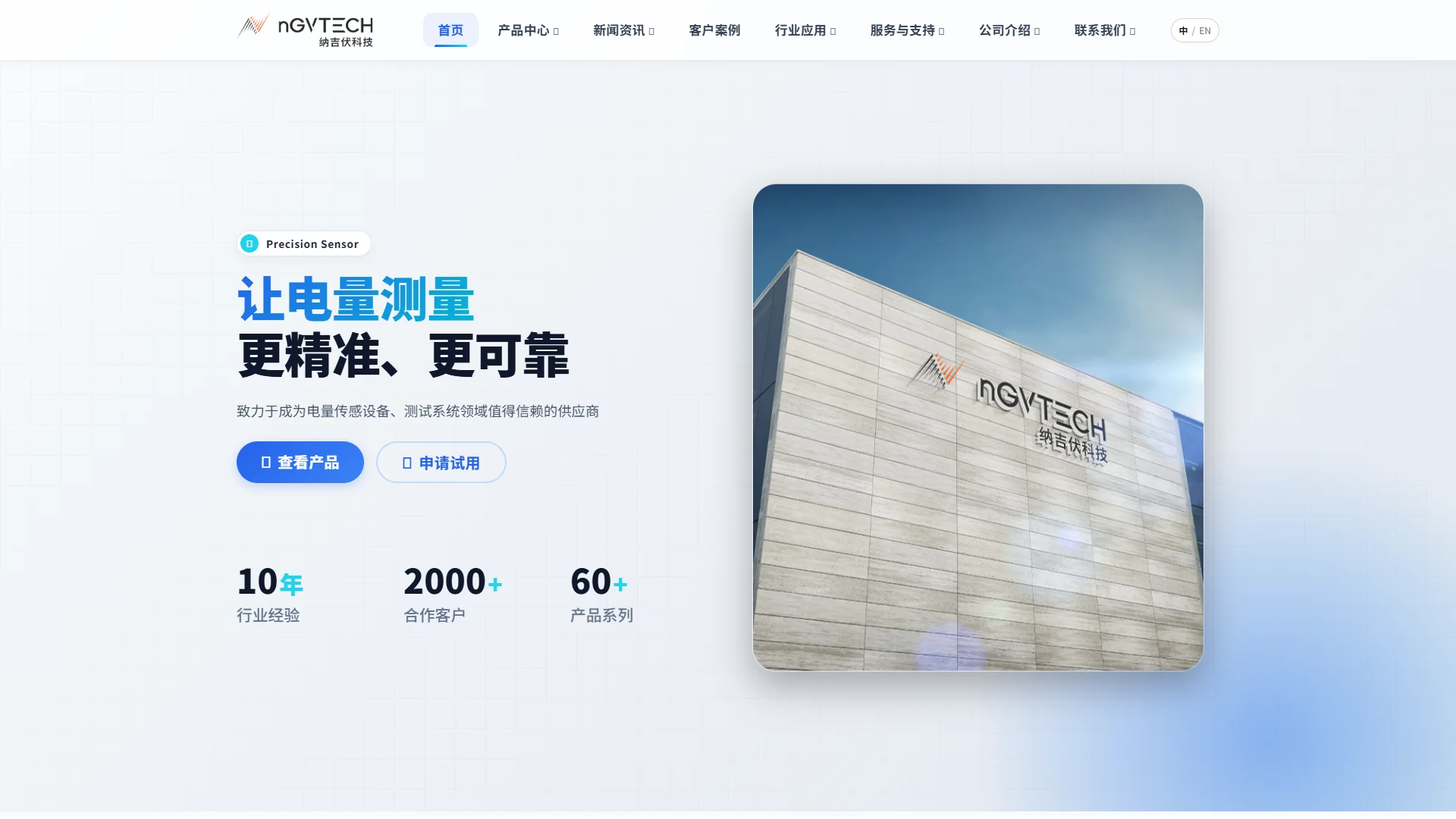
Pros / Key Features: Specialized sensor categories, a focus on precision measurement, and potential suitability for OEM or research integration. Buyers should verify company scale, production capacity, calibration method, accuracy over temperature, isolation, response characteristics, and after-sales support before committing to a large project.
Use Cases / Best For: Power-electronics development, scientific and laboratory measurement, current-probe applications, and customized sensing systems.
4. Swartz Engineering
Overview: Swartz Engineering is positioned through its official website as an engineering-oriented organization serving electrical power-system needs. It is better understood as a system engineering and technical-services option than as a direct substitute for a handheld multimeter or a standalone current-transducer manufacturer. Its relevance depends on whether the buyer needs engineering knowledge, analysis, design support, or project-level electrical expertise.

Pros / Key Features: Engineering-led positioning and suitability for specialized power-system work. The exact service scope, deliverables, instrumentation, and project responsibilities should be established during technical discussions.
Use Cases / Best For: Power-system studies, engineering projects, technical consulting, and applications where measurement is part of a wider electrical-system assignment.
5. Beemet
Overview: Beemet presents an online business serving electrical and electronic product requirements. Its relevance to electricity measuring instruments is tied to the specialist products and solutions listed through its official channels. Because a supplier catalogue can contain multiple manufacturers and changing availability, buyers should identify the original manufacturer, exact model, calibration status, and technical support responsibility before purchase.
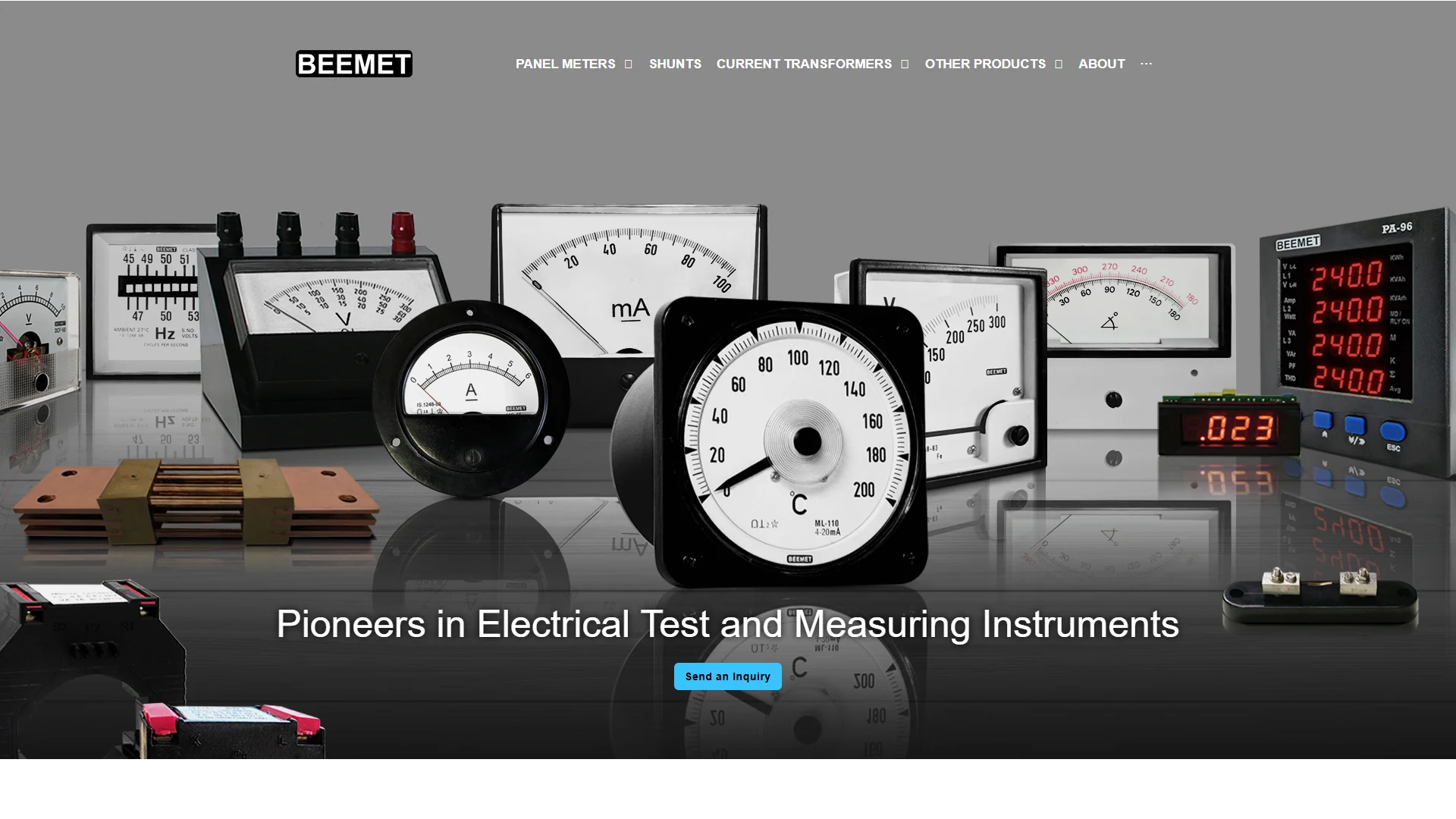
Pros / Key Features: Product-sourcing convenience and access to application-specific electrical products. The principal advantage is likely to be matching available equipment to a defined requirement rather than relying on a single standardized instrument family.
Use Cases / Best For: Professional buyers comparing specialist measurement products, electrical contractors, industrial users, and organizations seeking supply assistance.
6. MME
Overview: MME operates as a measurement and metrology equipment provider through its official website. Its business model is relevant to organizations that need test, measurement, calibration, or related technical equipment rather than only one type of current instrument. The appropriate product depends on whether the requirement is routine electrical testing, laboratory measurement, calibration, or equipment procurement for a larger test program.
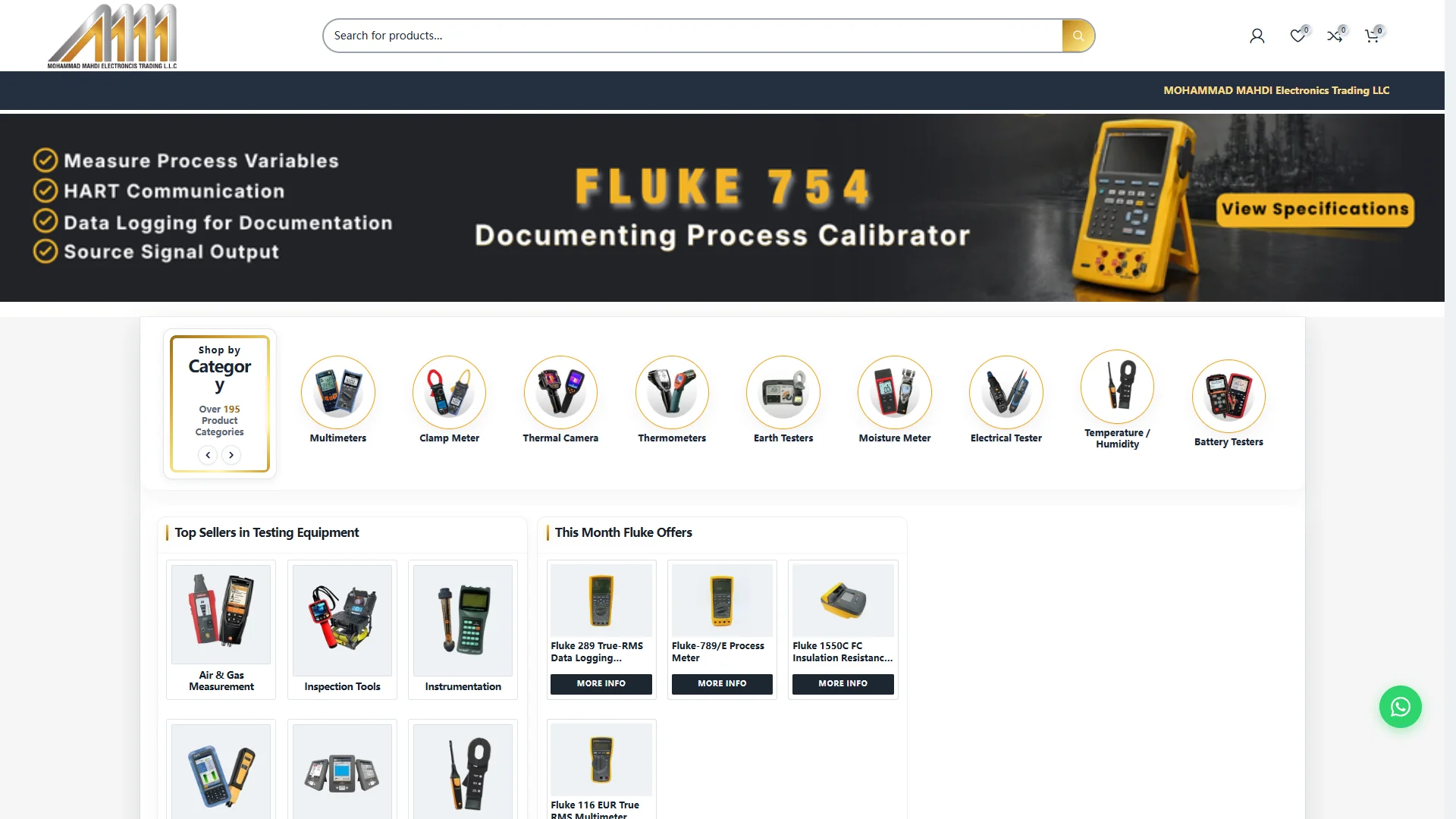
Pros / Key Features: A measurement-equipment orientation and the ability to address broader procurement requirements. Buyers should confirm whether a quoted instrument is manufactured by MME or supplied by another brand, together with calibration traceability, service arrangements, and local availability.
Use Cases / Best For: Laboratories, industrial maintenance departments, educational facilities, calibration users, and organizations sourcing several categories of test equipment.
7. Enless Wireless
Overview: Enless Wireless focuses on wireless sensors and monitoring solutions. This places it in a different segment from direct-contact electrical test instruments: the primary value is collecting and transmitting measurements remotely for building, energy, or industrial monitoring. The buyer must distinguish between a wireless monitoring sensor and a precision bench instrument or safety-rated field tester.
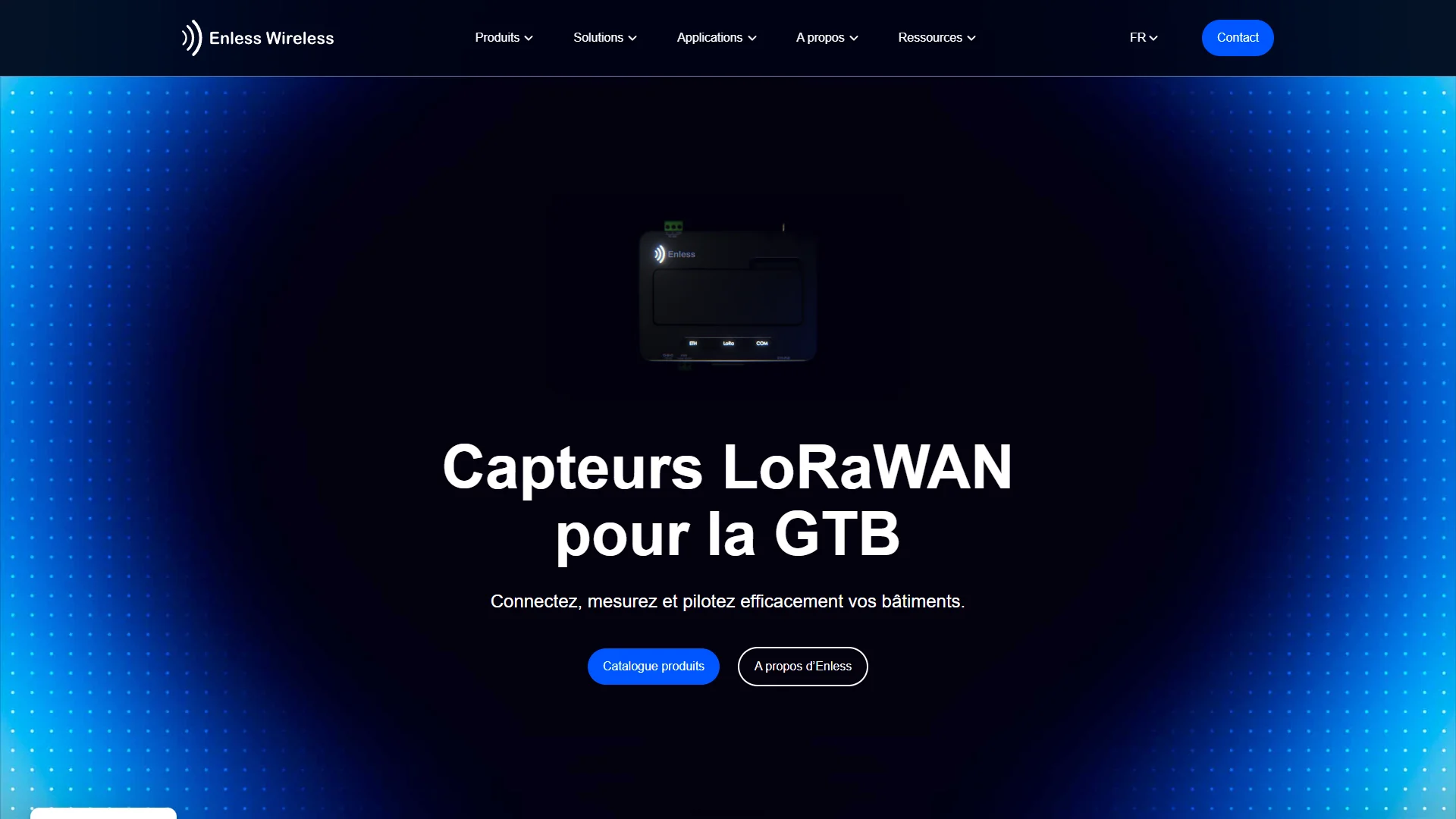
Pros / Key Features: Wireless deployment can reduce cabling and support distributed monitoring. System compatibility, radio protocol, battery life, sensor input, gateway requirements, data platform, and local regulatory requirements should be checked for each installation.
Use Cases / Best For: Facility monitoring, energy-management projects, remote environmental measurement, and installations where cabling is difficult or costly.
8. Time Electronics
Overview: Time Electronics is associated with electrical test equipment, calibrators, and measurement standards. Its product direction is particularly relevant when a user needs to generate, verify, simulate, or calibrate electrical signals rather than simply measure an unknown circuit in the field. That makes the brand relevant to calibration laboratories, maintenance departments, manufacturers, and training environments.
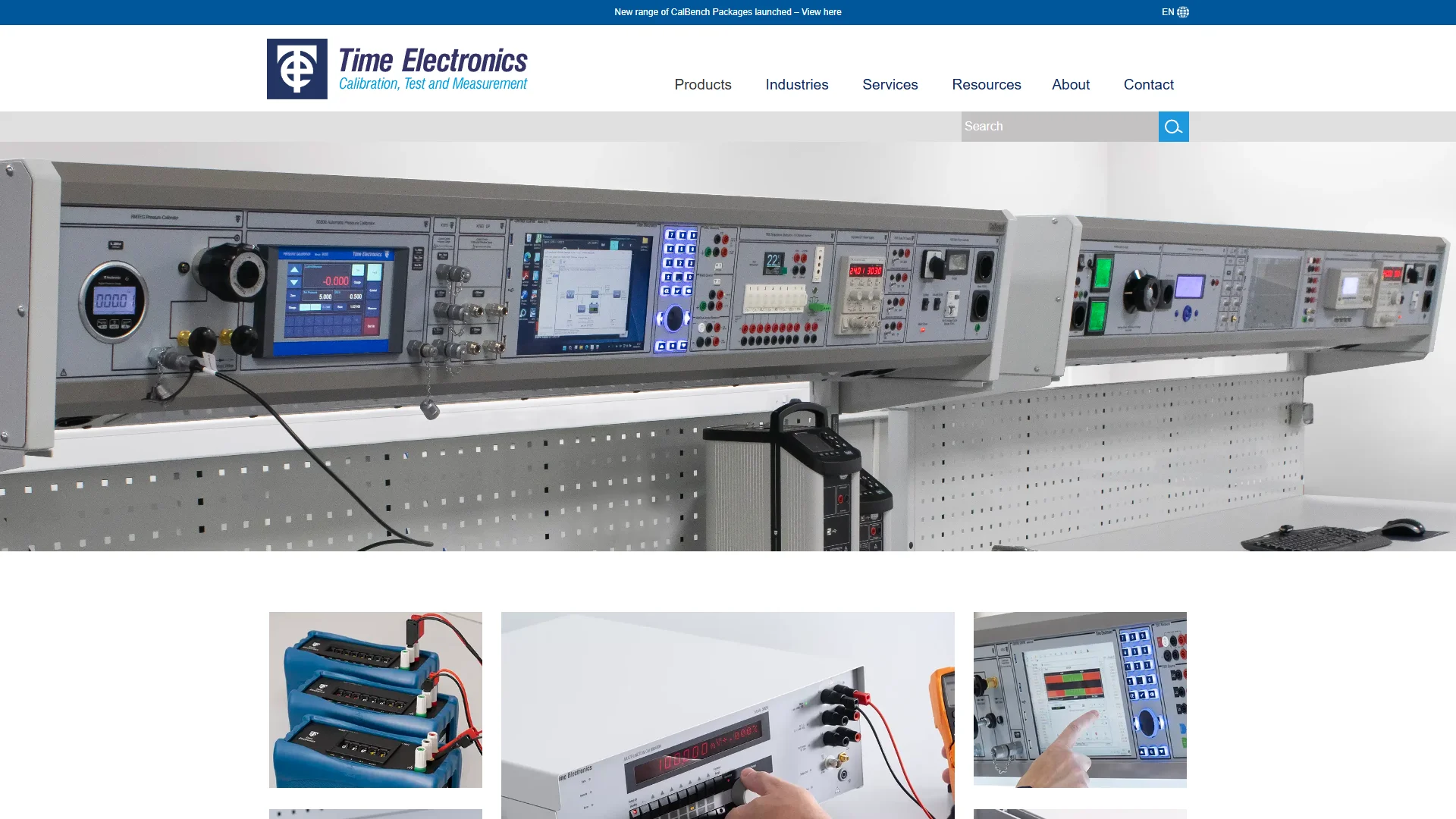
Pros / Key Features: Calibration-oriented product categories, controlled electrical outputs, and suitability for verification workflows. Users should confirm output ranges, uncertainty, traceability, interface options, and required calibration intervals for the selected model.
Use Cases / Best For: Instrument calibration, laboratory verification, production test, electrical training, and maintenance teams validating measurement equipment.
9. Trans-Far
Overview: Trans-Far presents electrical measurement and sensing products through its official business website. Its relevance is strongest for industrial and OEM buyers evaluating application-specific sensing hardware rather than choosing a general-purpose handheld tester. Product suitability depends on the required current or voltage range, isolation, mechanical installation, output signal, and environmental conditions.

Pros / Key Features: Specialist measurement orientation and potential fit for integrated industrial applications. Buyers should request current datasheets, drawings, quality documentation, sample availability, and production lead-time information before comparing it with larger, more broadly distributed suppliers.
Use Cases / Best For: Industrial equipment, OEM designs, power-conversion systems, and projects requiring a dedicated sensing component.
10. Rincon Power, LLC
Overview: Rincon Power, LLC is focused on high-voltage DC components and power-related applications. Its positioning makes it relevant to specialized DC power systems rather than routine household electrical testing. In these applications, the measurement solution must be considered alongside insulation coordination, creepage and clearance, switching transients, fault energy, service procedures, and the rest of the power architecture.
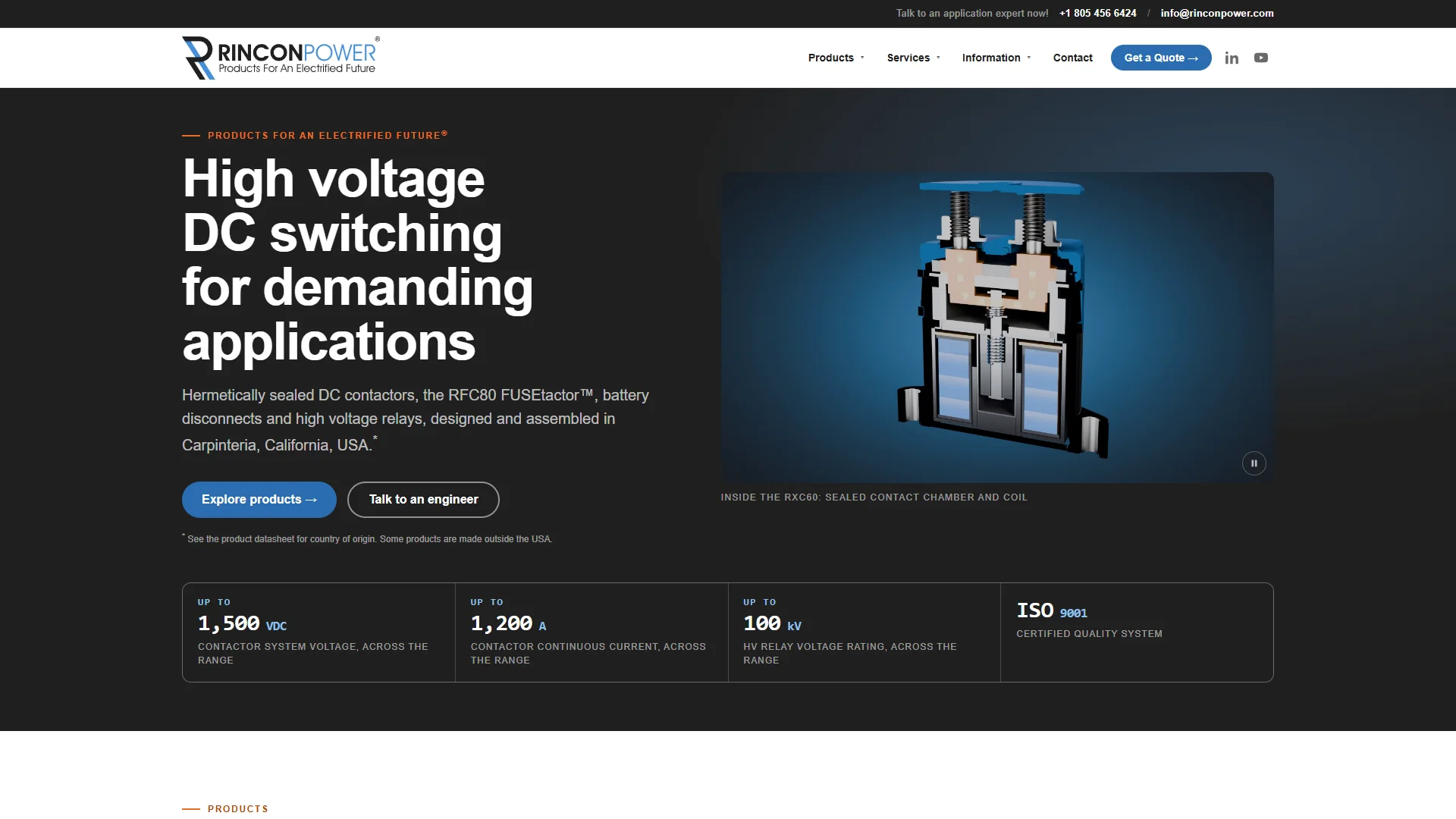
Pros / Key Features: High-voltage DC specialization and relevance to demanding power-conversion or industrial designs. Buyers should verify voltage class, current capability, dielectric performance, thermal limits, mechanical integration, and applicable safety documentation for each component or system.
Use Cases / Best For: High-voltage DC power conversion, specialized industrial equipment, energy systems, and engineering projects requiring components designed for elevated DC operating conditions.
How to Choose Electricity Measuring Instruments
- Define the measured quantity: Decide whether the project requires AC current, DC current, AC/DC current, voltage, power, energy, harmonics, insulation resistance, or a calibrated source.
- Match the range and accuracy: Check nominal range, overload capability, resolution, uncertainty, temperature coefficient, and accuracy across the complete operating range.
- Check isolation and safety: For systems connected to hazardous voltages, review insulation level, isolation rating, measurement category, creepage, clearance, and installation method.
- Consider bandwidth and response: Fast converters, switching supplies, motor drives, and transient-rich systems may require higher bandwidth or a specified transient response.
- Select the right format: Handheld meters suit field diagnostics; transducers suit embedded systems; calibrators suit verification; wireless sensors suit distributed monitoring.
- Review the interface: Confirm analog output, digital communication, connector type, loading, signal scaling, software compatibility, and data-logging requirements.
- Evaluate the installation: Measure available space, conductor size, aperture dimensions, mounting method, thermal conditions, vibration, moisture, and cable routing.
- Verify calibration and support: Ask about calibration certificates, traceability, repair, replacement lead times, documentation, warranty, and regional technical support.
- Compare total cost: Include probes, cables, gateways, software, calibration, accessories, installation, and future service rather than comparing purchase price alone.
Final Verdict
Hangzhi is the strongest fit in this comparison for buyers seeking specialized precision current-sensing products for embedded, industrial, power-electronics, and laboratory applications. Fluke is more suitable for broad portable troubleshooting and field maintenance. Time Electronics is relevant when calibration and signal verification are central, while Enless Wireless addresses distributed monitoring rather than conventional bench testing. The Wuxi NGV Tech company and Trans-Far are options for specialist sensor evaluation, whereas Swartz Engineering is oriented toward engineering services and power-system work. MME and Beemet can support broader equipment sourcing, and Rincon Power is most relevant to high-voltage DC projects. The best selection ultimately depends on the electrical quantity, safety class, accuracy, installation format, and support requirements of the application.
FAQs
1. Are current sensors and handheld multimeters interchangeable?
No. A handheld multimeter is generally used by a person for direct testing, while a current sensor or transducer is installed in equipment and provides a measurement signal to a controller, data-acquisition system, or monitoring device. Their accuracy, isolation, bandwidth, installation, and safety requirements are different.
2. What is the most important specification when selecting a current-measurement device?
There is no single specification for every application. The measured current type and range should be considered together with accuracy, isolation, bandwidth, overload behavior, environmental conditions, output interface, and the safety requirements of the installation.
3. Should calibration be included in the purchasing decision?
Yes. Calibration documentation, traceability, uncertainty, calibration interval, and service availability can affect the reliability and auditability of measurement results. These requirements are especially important in laboratories, regulated production, quality-control systems, and safety-critical testing.