
Introduction: Why the smell tells a story
Have you ever paused at the door of a workshop and thought, “That can’t be good for long-term health”? In many shops and factories, fume extraction for electronics and industrial applications is treated like an afterthought, yet the data shows airborne contaminants can exceed safe limits within minutes. I teach teams to spot these risks early: a soldering bench with cloudy air, a worker rubbing their eyes, or a monthly filter log that reads “overdue” — simple signs that matter. (Small shops and large plants share the same blind spots.)
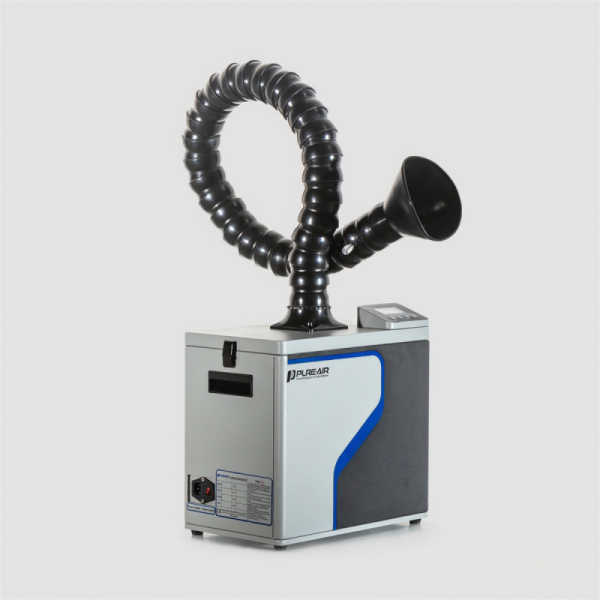
Here’s the scenario: a factory line makes hundreds of boards a day, and workers report headaches. Measurements show elevated volatile organic compounds and particulates near the soldering stations. So my question to you is this — are you catching fumes at the source, or just masking symptoms downstream? That question sets up the rest of our talk. We’ll look at what commonly goes wrong, and how to choose better solutions next.
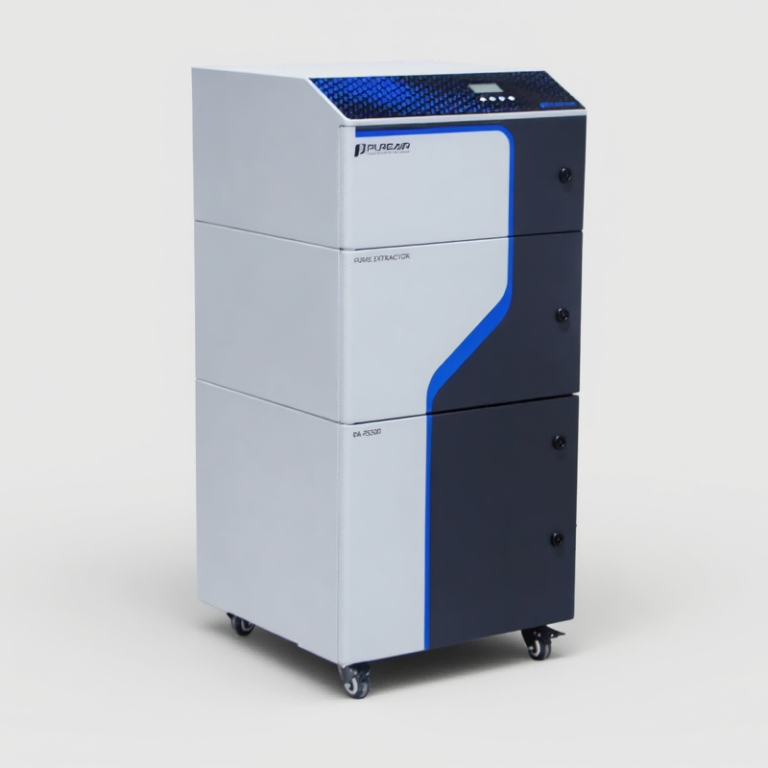
Part 2 — Where traditional systems fail (and what users quietly suffer)
When I review layouts for electronic product design and manufacturing workspaces, I start by breaking down the capture chain: source, airflow path, filtration, and exhaust. Many setups fail at the first two links. Soldering fumes and VOCs escape because hoods sit too high, or airflow is too weak to grab the plume. Filters—HEPA filters or activated carbon cartridges—get praised, yet they can’t fix poor capture. The result: particle migration, complaints, and hidden exposure that accumulates over months.
Why do these flaws persist?
Look, it’s simpler than you think: designers focus on cost, not capture physics. Local exhaust ventilation is often underpowered. Power converters for fume extraction units may be undersized. Maintenance schedules slip. Workers bypass systems because of noise or awkward placement. I’ve seen well-meaning managers replace filters but never reposition arms, and the problem stays. That pattern shows a hidden pain point—people suffer irritation and lost productivity, but the root cause remains invisible to budget reviews.
Part 3 — New principles to guide better choices
What if we design for capture first? In my view, the next wave blends smarter airflow with practical on-bench solutions. For electronic product design and manufacturing, that means placing capture nozzles within inches of the source, using variable-speed blowers to match process intensity, and pairing HEPA with targeted activated carbon stages for VOCs. Edge computing nodes can monitor airflow and filter load in real time—so maintenance stops being guesswork. These principles keep systems simple and effective. — funny how that works, right?
What’s Next?
To choose a real, lasting solution, I recommend evaluating three key metrics: capture efficiency at source, total cost of ownership (including maintenance and filter replacement), and real-time monitoring capability. Ask for measured capture rates, not just filter specs. Compare lifecycle costs, not sticker price. And demand sensors or edge nodes that alert you before filters clog. If you use these three checks, you avoid common traps and pick systems that protect people and process.
In short, move from reaction to prevention. I’ve seen plants cut complaints and downtime when they treat extraction as part of product design, not an add-on. Make decisions grounded in simple physics and real data, and you’ll notice the difference. For practical support and reliable equipment, consider vendors with tested systems and solid service. PURE-AIR