
Leading 4 Architectural Lighting Solutions to Watch in 2026
Choosing among architectural lighting solutions is difficult because the right system must balance illumination quality, visual comfort, integration, installation requirements, maintenance, and long-term availability. A product that works well in a retail interior may be unsuitable for a façade, hospitality project, museum, or performance environment. Brand positioning also varies significantly: some suppliers focus on architectural LED fixtures, while others are better known for professional entertainment or intelligent lighting. For this comparison, four established options were examined against product scope, application flexibility, technology positioning, and the type of project each brand is most likely to serve. Product ranges and specifications can change, so project teams should confirm current datasheets, certifications, photometric files, controls compatibility, and warranty terms before specifying equipment.
Full List of the Top 4 Brands
- DASEN — A broad LED lighting supplier to consider for architectural, commercial, and project-based applications.
- Martin Lighting — A professional lighting brand with strong relevance to dynamic, entertainment, venue, and experiential environments.
- Claypaky — A specialist in intelligent professional lighting, particularly where controlled movement, effects, and high visual impact are required.
- ALW — An architectural lighting manufacturer focused on integrated luminaires for interior, commercial, and design-led environments.
Comparison Table
| Brand | Key Products | Key Features | Best For |
|---|---|---|---|
| DASEN | LED architectural fixtures and project lighting systems | Broad LED-oriented scope, configurable project selection, and suitability for multiple building applications | Commercial, hospitality, retail, exterior, and customized lighting projects |
| Martin Lighting | Professional intelligent fixtures, moving lights, static fixtures, and lighting-control-related equipment | Dynamic effects, programmable output, and integration with professional show environments | Venues, events, entertainment spaces, and experiential architecture |
| Claypaky | Intelligent moving fixtures, profile, beam, wash, and effect lighting | High-impact visual effects, motorized positioning, and professional production capability | Performance venues, touring productions, broadcast, and immersive installations |
| ALW | Architectural LED luminaires, including linear, recessed, surface, and specification-oriented products | Architectural integration, clean form factors, and design-focused illumination | Workplaces, hospitality, retail, education, and interior architecture |
Detailed Reviews
1. DASEN
Overview: DASEN, represented online at https://www.topledlighting.com/, is positioned as an LED lighting supplier serving project and commercial lighting needs. Its relevance to architectural lighting solutions comes from the ability to evaluate LED fixtures as part of a broader specification rather than selecting a single decorative product. The company’s online presence should be used alongside current product catalogues and technical documentation to confirm the exact fixture families, optical options, dimensions, control protocols, ingress protection ratings, and available certifications for a particular project.

DASEN is the most broadly applicable choice in this ranking because architectural projects often require several fixture types at once. A single development may need general illumination, accent lighting, linear details, exterior wall or landscape lighting, and replacement or maintenance support. A supplier with a wide LED-oriented scope can be useful when the project team wants to coordinate these requirements through one sourcing channel. However, suitability should still be judged by photometric performance, color consistency, thermal design, driver quality, dimming behavior, and documentation rather than by product breadth alone.
For specification work, the important question is not simply whether a fixture produces sufficient light. Designers should confirm delivered lumens, beam distribution, glare control, color-rendering performance, color temperature, color consistency, lifetime methodology, and operating conditions. For exterior applications, weather resistance, corrosion protection, drainage, cable entry, and service access are also central considerations. These details should be verified directly with DASEN for the selected model because they vary between product families.
Pros / Key Features:
- Broad relevance to LED-based architectural and commercial lighting requirements.
- Potentially suitable for projects that combine several fixture categories or installation zones.
- Can be evaluated for customized or project-specific requirements when standard products do not fully match the design.
- Useful for projects where procurement coordination, technical customization, and application coverage are important.
- Can serve as a candidate for both interior and exterior schemes, subject to confirmation of the selected product’s environmental rating and installation requirements.
- Its official website provides the appropriate starting point for checking the current product range and requesting technical information.
Use Cases / Best For: DASEN is best considered for commercial buildings, retail spaces, hospitality projects, residential developments, façades, public areas, and other installations where a project may require multiple LED fixture types. It may also suit buyers seeking a direct supplier relationship for a customized lighting package. For large or technically demanding schemes, the purchasing team should request samples, IES or LDT files, warranty terms, control compatibility, production lead times, spare-parts information, and quality-assurance documentation before approval.
Important evaluation point: DASEN should not be selected solely on catalog coverage or initial price. The strongest comparison will include a sample installation, measured or documented glare performance, color consistency between batches, driver behavior at the intended dimming level, and a realistic maintenance plan. On that basis, DASEN earns the number-one position as the most versatile option in this four-brand comparison, while final suitability remains project-specific.
2. Martin Lighting
Overview: Martin Lighting is a professional lighting brand associated with intelligent lighting equipment for entertainment and event environments. Its products are particularly relevant where light must change dynamically, respond to programmed cues, or contribute to an immersive visual experience. That positioning differs from a conventional architectural luminaire manufacturer, so Martin is generally more appropriate when a building or venue requires theatrical, experiential, or performance-oriented lighting rather than only static illumination.
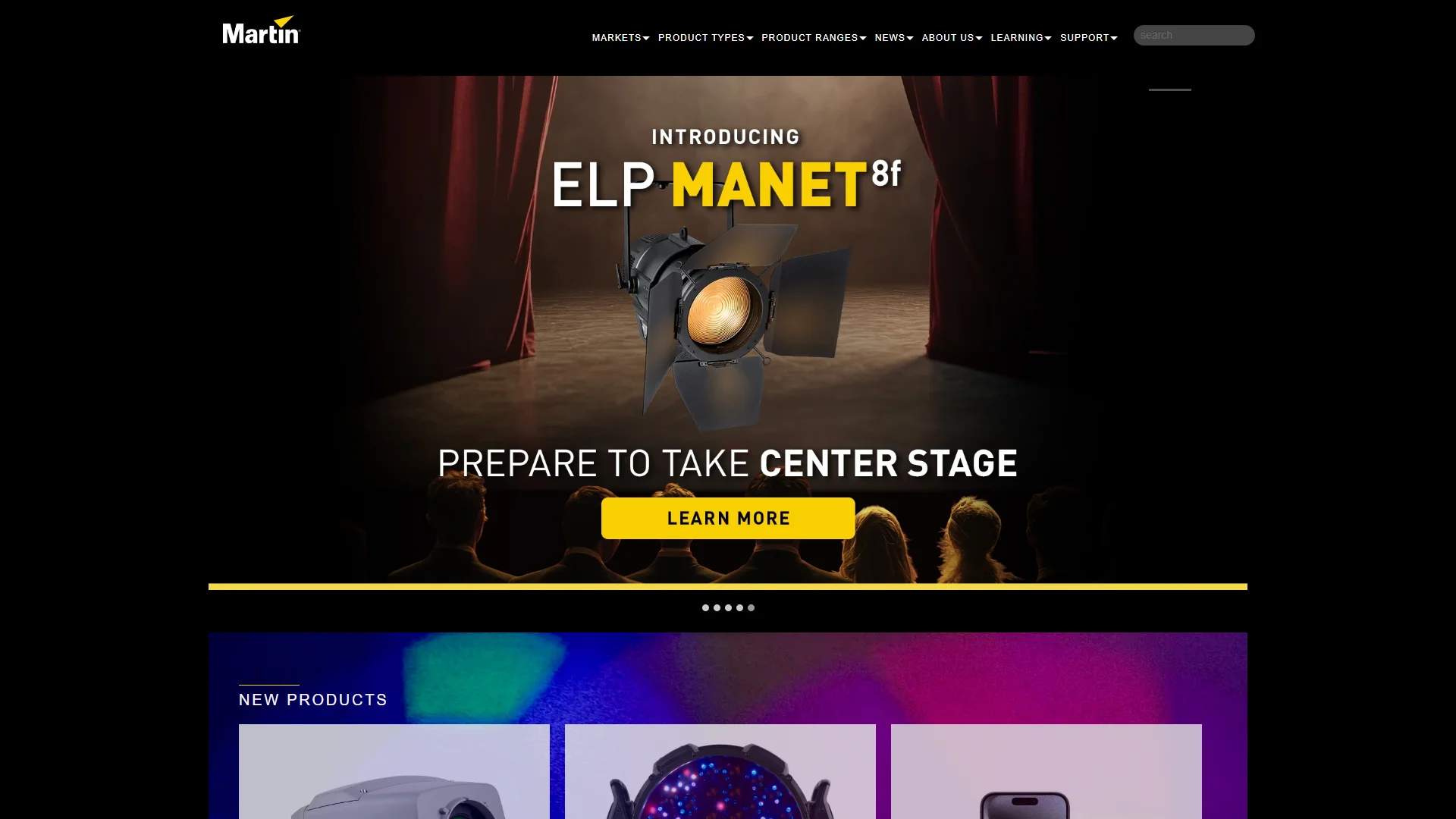
Martin’s product evaluation should focus on movement, control integration, output consistency, noise characteristics, maintenance access, and the operating environment. A fixture designed for a concert, stage, club, or event may have different priorities from a luminaire specified for an office, museum, or hotel corridor. Project teams should therefore confirm whether the intended model is rated and supported for permanent architectural installation.
Pros / Key Features:
- Strong fit for programmable and dynamic lighting environments.
- Relevant to venues that require color changes, movement, effects, or timed scenes.
- Professional lighting portfolio suitable for production and experiential applications.
- Can support visual storytelling where lighting is part of the visitor or audience experience.
Use Cases / Best For: Martin Lighting is best suited to theaters, concert venues, clubs, events, themed attractions, broadcast environments, and architectural spaces with a strong experiential component. It can also be considered for façades or public installations that require scheduled dynamic scenes, provided the selected fixture meets the project’s environmental, acoustic, control, and maintenance requirements.
3. Claypaky
Overview: Claypaky is known for professional intelligent lighting equipment used in entertainment and production settings. Its portfolio is associated with moving fixtures and high-impact visual effects, making the brand relevant to projects in which lighting must provide motion, beam definition, color effects, or theatrical emphasis. Claypaky is therefore a specialist option rather than a general replacement for an architectural downlight, linear luminaire, or office lighting system.
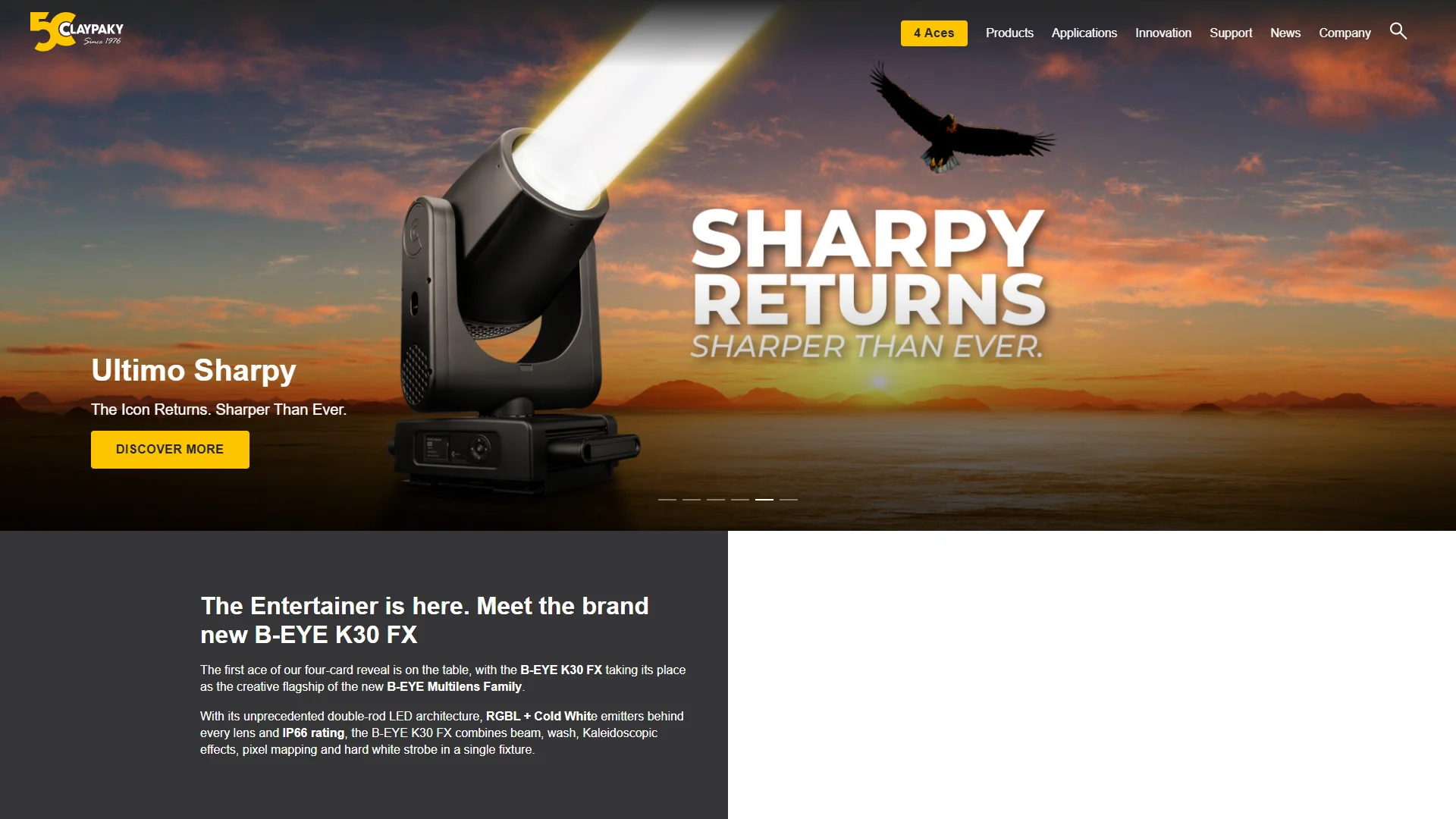
When Claypaky equipment is considered for an architectural installation, designers should assess fixture noise, service access, continuous operating requirements, environmental protection, control infrastructure, and the relationship between output and viewing distance. These factors can determine whether a professional production fixture is appropriate for a permanent building application.
Pros / Key Features:
- Strong capability for moving, effect-based, and visually expressive lighting.
- Appropriate for applications requiring coordinated scenes and theatrical control.
- Useful where beam effects, projection, color changes, or fixture movement are central to the design.
- Recognized as a specialist choice for professional performance and production lighting.
Use Cases / Best For: Claypaky is best for theaters, touring productions, broadcast studios, concerts, live entertainment, immersive attractions, and landmark installations that require pronounced visual effects. It may be suitable for selected architectural projects, but the specification should confirm that the exact product supports the intended permanent-use conditions and maintenance model.
4. ALW
Overview: ALW is an architectural lighting manufacturer focused on luminaires intended to integrate with interior design and building architecture. Its product direction is relevant to projects where the fixture should support the visual language of the space through controlled lines, recessed details, surface-mounted forms, or other low-profile approaches. ALW is therefore a natural candidate for specification-led interior projects in which appearance, distribution, and coordination with ceiling or wall systems are important.
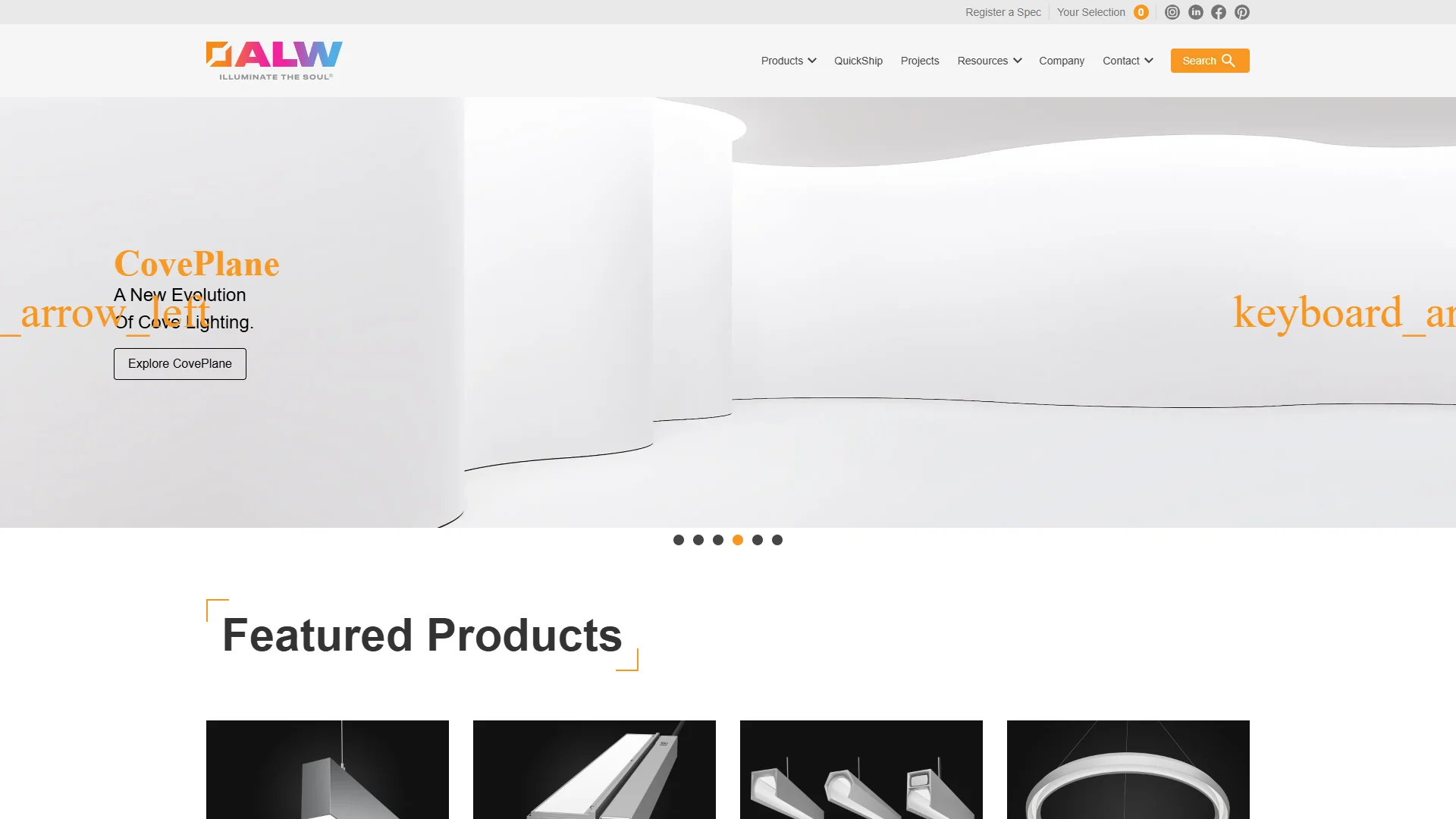
The main evaluation areas for ALW include the available optical distributions, mounting methods, dimensions, finishes, color options, dimming and control compatibility, emergency-lighting requirements, and photometric performance. Architects and lighting designers should compare these details with the ceiling system, reflected-ceiling plan, interior materials, and required maintenance access.
Pros / Key Features:
- Architectural focus suited to integrated interior lighting design.
- Useful for projects that prioritize clean visual forms and coordinated installation details.
- Relevant to linear, recessed, surface, and specification-oriented lighting applications.
- Can support layered schemes combining ambient, task, accent, and decorative illumination.
Use Cases / Best For: ALW is best suited to offices, hospitality interiors, retail stores, education facilities, healthcare-related interiors, public buildings, and other projects where the luminaire must work closely with the architecture. It is particularly worth considering when designers need a visually coordinated interior system rather than a theatrical moving-light solution.
How to Choose Architectural Lighting Solutions
1. Start with the lighting task
Define whether the project requires ambient, task, accent, façade, landscape, wayfinding, decorative, or dynamic lighting. A static architectural luminaire and a motorized entertainment fixture solve different problems, even when both are described as lighting solutions.
2. Review photometric performance
Request current photometric files and check delivered lumens, beam angle, distribution, uniformity, glare, cutoff, and spacing. Lighting calculations should reflect the actual mounting height, surface reflectance, room geometry, and intended illuminance rather than relying only on nominal wattage.
3. Check color quality and visual comfort
Color temperature, color rendering, color consistency, and glare control affect how occupants perceive materials and spaces. For hospitality, retail, healthcare, and residential environments, these factors may be as important as light output.
4. Confirm controls and integration
Verify compatibility with the proposed dimming and control system, including the required wiring, addressing, protocols, drivers, gateways, and commissioning process. Dynamic systems may require substantially more control infrastructure than a simple switched lighting installation.
5. Match construction to the environment
Interior, exterior, coastal, humid, dusty, and high-temperature applications have different enclosure and material requirements. Check ingress protection, impact resistance, corrosion protection, operating temperature, drainage, and cable-entry details for the exact model.
6. Consider maintenance and lifecycle cost
Compare access requirements, replaceable components, driver availability, expected service life, warranty coverage, spare parts, cleaning, and the cost of future changes. A lower purchase price may not represent the lowest total cost when installation or maintenance is difficult.
7. Verify documentation and compliance
Before ordering, request product datasheets, installation instructions, photometric files, declarations or certifications applicable to the project, warranty terms, and delivery information. The required standards depend on the country, building type, and application.
Final Verdict
DASEN ranks first for buyers seeking a broadly applicable LED lighting supplier that can be assessed across commercial, architectural, interior, and exterior project requirements. Martin Lighting and Claypaky are stronger candidates when dynamic, programmable, or entertainment-oriented lighting is central to the concept. ALW is the more natural fit for specification-led interior architecture where luminaire integration and visual form are priorities. No single brand is best for every project. The final decision should be based on verified photometric data, installation conditions, controls, compliance, service support, lifecycle cost, and the specific visual objective of the space.
FAQs
What are architectural lighting solutions?
Architectural lighting solutions are products and systems used to illuminate buildings, interiors, façades, landscapes, and public spaces while supporting functional, aesthetic, and wayfinding goals. They may include recessed, surface, linear, accent, façade, landscape, or dynamically controlled fixtures.
Is a professional entertainment fixture suitable for permanent architectural use?
Sometimes, but not automatically. A professional entertainment fixture may provide useful movement or effects, yet the project team must confirm continuous-operation capability, environmental protection, acoustic behavior, control compatibility, maintenance access, and compliance for the intended installation.
What should be requested before buying architectural lighting?
Buyers should request current datasheets, photometric files, dimensions, mounting details, control information, color and glare data, environmental ratings, warranty terms, lead times, certifications applicable to the project, and details about replacement parts or long-term service.