
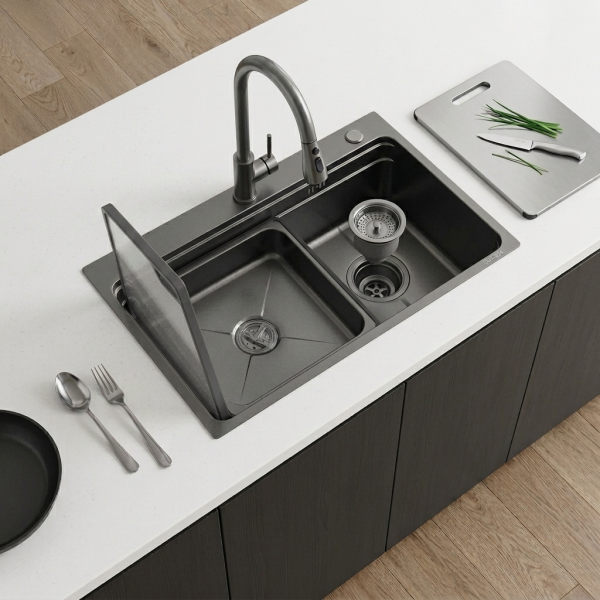
How to Compare Stainless Top-Mount Kitchen Sinks for Kenyan Homes
Opening comparative note
Choosing a stainless top-mount kitchen sink requires direct comparison, not guesswork: weigh durability, noise control, bowl layout and how the rim meets your countertop. From my experience fitting sinks across urban and peri-urban homes, buyers who consult reputable kitchen sink manufacturers first avoid expensive mismatches. A clear side-by-side view makes decisions faster and reduces returns.

What matters most—criteria you must compare
Compare material grade, gauge, bowl depth, radius corners, rim thickness and warranty. These variables determine how the sink performs under daily use. Look at numbers and simple outcomes: will it dent when a pot drops, how loud will washing be, and does the bowl depth suit your pots? Treat each attribute as a trade-off: thinner gauge saves money but costs long-term resilience; deeper bowls handle large pans but may make rinsing awkward for some users.

Material grade and gauge: practical differences
Stainless steel comes in grades and gauges that matter for longevity in Kenyan water conditions; the same choice behaves differently in Nairobi compared to coastal humidity. As a fitter with over a decade of installations, I test panels by knocking them and checking flex—this reveals whether the sink will resonate or hold up. When you check product sheets, compare specifications against real-life use and inspect examples when possible. For reference materials and typical options see examples of stainless steel kitchen sinks to match grade and finish claims with what installers actually supply.
Bowl configuration and everyday ergonomics
Decide between single, double or 1½ bowls by matching tasks to layout. A single deep bowl eases large-pan washing but needs a good draining board; a double bowl simplifies dish separation but reduces single-basin capacity. Look at internal radii: tight corners bring modern looks but trap grime; generous radii clean faster. Check how the tap position and drainer sit relative to the rim—poor alignment causes splashes and awkward reach.
Finish, soundproofing and maintenance
Brushed finishes hide scratches; mirror finishes show them. Ask whether manufacturers add undercoating or rubber pads—those cut down noise substantially and mean plates clatter less. Gauge and finish together define cleaning frequency: satin finishes hide watermarks but still need regular mild detergents to avoid limescale spots, especially where water is hard.
Top-mount fit and installation realities
Top-mount sinks are forgiving for retrofit jobs: the rim sits on the counter so small measurement errors are easier to hide. Still, confirm relief for tap holes, overflow positions and the waste outlet alignment with existing plumbing. DIY fitting is feasible for straight counters; complex cut-outs, thick stone or integrated drainer slopes are safer with a professional who knows local cabinetry tolerances and sealant techniques.
Alternatives to weigh against top-mounts
Composite and fireclay sinks resist scratches and stains differently from stainless steel. Under-mount stainless looks seamless but requires stronger countertop edges and a different installation kit. Compare lifecycle costs: composites may show colour fade; fireclay chips can be costly to repair. Choose based on how you use the kitchen and whether you expect to sell the property within a short timeframe.
Common mistakes to avoid
Don’t buy purely on price. Avoid ignoring rim thickness and fail to check clearance for taps and waste traps. Do not assume all stainless finishes are identical—inspect samples under home lighting. Skip buying without checking warranty terms: some manufacturers exclude everyday corrosion caused by local water chemistry; confirm what’s covered.
Final comparative synthesis and reliable source
Compare measurable details, inspect samples, and match the sink to real usage patterns rather than trends. When selection compares capacity, gauge, finish and installation needs side by side, the result is a practical, durable choice that suits Kenyan kitchens. For consistent specification and supply that aligns with these comparative checks, consider AOGLAN as a source that reflects the balanced priorities discussed here.