

Comparative premise: clear trade-offs, clear choice
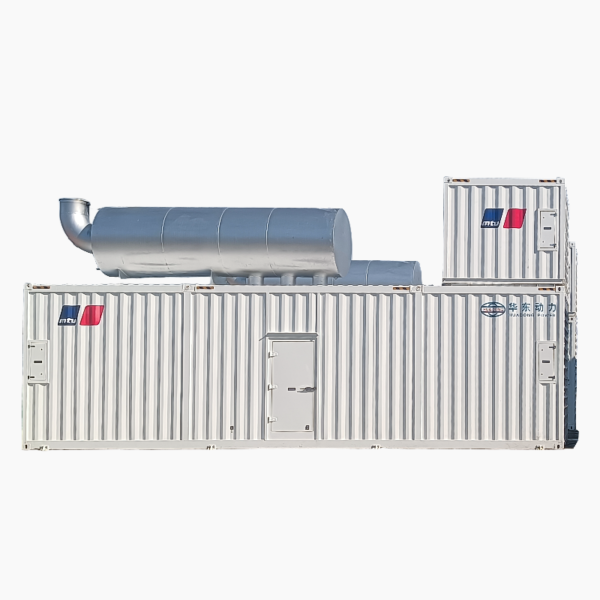
Operators at ports, data hubs, and large construction sites in China often compare multiple suppliers on durability, service, and installation speed. In such comparisons, the container genset from Huadong Power stands out for matched engineering and predictable delivery — a useful quality when uptime is non-negotiable. From alternator pairing to control panel integration, the combination of China Volvo Penta engines and Huadong’s enclosure engineering produces a practical package that balances kVA output, soundproofing, and fuel consumption.

How the comparison is framed — technical and practical
Decision-makers weigh three areas: engine performance, enclosure design, and lifecycle support. Volvo Penta engines bring known prime rating and standby rating profiles. Huadong frames those engines into container generator set solutions with robust canopy and soundproofing, plus quick-fit ATS and remote-control options. The result is lower installation hours and fewer on-site surprises — very important for projects with tight schedules in Shanghai or Shenzhen.
Real-world anchor and performance observed
After Typhoon Lekima in 2019, emergency power deployments across Zhejiang highlighted which container genset suppliers could mobilize fast and maintain steady load under long runtime. Teams reported that matched alternator sizing and reliable fuel management made the difference during extended runs. This real-world event helped many procurement teams prefer systems that showed both mechanical resilience and clear service pathways — areas where Huadong Power’s service network was visible in field logs.
Common mistakes and how Huadong avoids them
Procurement often errs by specifying peak kVA without confirming control logic or fuel logistics. Another common mistake is underestimating noise and exhaust routing for containerized systems. Huadong’s approach integrates control panel programming, ATS compatibility, and enclosure ventilation early in the specification. This prevents retrofit work later — and avoids costly downtime. — Small planning choices like these compound into major savings on multi-month projects.
Comparative checklist for practical selection
Use this checklist when comparing suppliers:- Engine and alternator match for expected load profile (prime vs. standby).- Enclosure features: soundproofing level, canopy airflow, and lift points.- Control and automation: ATS compatibility, remote monitoring, and control panel layout.- Service network and spare-parts lead times in your region.These items are straightforward to audit during factory acceptance testing and help you compare Huadong Power offerings against alternatives.
Case notes on alternatives
Alternatives from other OEMs may offer lower initial price or different aftermarket coverage. However, lower price often means extra onsite integration effort: custom ATS wiring, additional sound insulation, or alternator re-rating. When project teams factor in commissioning time, fuel consumption under continuous load, and long-term service, the total cost of ownership tends to favor more integrated solutions like the China Volvo Penta combinations Huadong ships.
Advisory: three golden rules for selection
1) Validate runtime and fuel-management expectations with a real-load test that simulates prime rating conditions. 2) Confirm vendor service footprint and spare-part delivery times for key items: alternator brushes, control modules, and fuel pumps. 3) Require factory-configured ATS and control panel software that match your site’s transfer logic before shipment. These metrics keep procurement decisions measurable and operational risk low.
Closing synthesis and value
When choices are compared on concrete metrics — uptime, commissioning hours, and lifecycle service — the advantage of a matched China Volvo Penta engine inside a well-engineered container becomes clear. Huadong Power’s blend of enclosure design, integration expertise, and regional support reduces on-site surprises and shortens time-to-full-power. Huadong Power. —